Weaker global growth prospects may dampen external demand and reduce remittance flows

FinTech BizNews Service
Mumbai, April 8, 2026: The Monetary Policy Committee (MPC) held its meeting from April 6 to 8, 2026, under the chairmanship of Shri Sanjay Malhotra, Governor, Reserve Bank of India. The MPC had a detailed assessment of the evolving macroeconomic and financial developments and the outlook.
https://fintechbiznews.com/govtregulators/repo-rate-525-drag-on-domestic-prod-in-26-27
The RBI Governor made a statement on Developmental and Regulatory Policies, on April 08, 2026.
https://fintechbiznews.com/govtregulators/treds-due-diligence-of-msmes-ended-participant-base-in-money-market-expanded-
https://fintechbiznews.com/govtregulators/relief-to-banks-on-crar-computation
Here are studied views of the well-known AMCs:
Suyash Choudhary, CIO-Fixed Income, Bandhan AMC
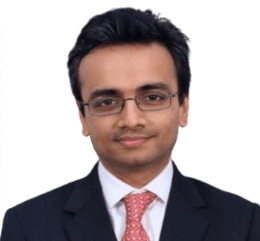
The MPC kept policy rates on hold and left stance unchanged. This was almost wholly as expected, with the market focus instead on the assessment of RBI / MPC given the developments in West Asia. Though there is some relief on the geo-political front at the time of writing, the policy thinking with regard to the commodity shock was nevertheless looked forward to.
The Governor highlighted the following channels of impact:
Importantly, the Governor mentioned: “The initial supply shock can potentially transform into a demand shock over the medium term if the restoration of supply chains is delayed”.
Vikas Garg, Head – Fixed Income, Invesco Mutual Fund:
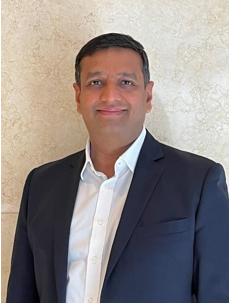
Amid a challenging backdrop, the MPC delivered a well‑balanced policy by maintaining the status quo on both the policy rate and stance. The RBI provided growth and inflation projections for FY27 under the new series at 6.9% and 4.6%, respectively, with potential risks stemming from the West Asia conflict. Apart from Middle East tensions, the El Niño impact on the monsoon needs to be closely monitored to assess its implications for inflation. The re‑affirmation of the RBI’s commitment to providing sufficient liquidity is a welcome relief, as markets were concerned about tighter liquidity conditions amid currently low overnight yields.
Overall, the policy can be characterised as neutral to mildly dovish, as the RBI adopted a wait‑and‑watch approach in response to the evolving West Asia situation, while highlighting risks to both inflation and growth should the conflict persist. This policy stance is likely to help markets price out fears of any immediate rate hike under the flexible inflation‑targeting framework. Additionally, the morning announcement of de‑escalation in the West Asia conflict bodes well for market yields, which had moved sharply higher earlier. At current elevated yield levels, the risk‑reward dynamics have now turned favourable across the yield curve.
Kaustubh Gupta, CIO – Fixed Income, Aditya Birla Sun Life AMC:
“The RBI delivered a neutral-to-dovish policy by holding rates as the MPC chose to look through supply shock emanating from the ongoing energy crisis. The overall guidance tilted towards “vigilance” given the elevated concerns around growth & comfort on inflation within the mandate. We believe the policy rates would remain on hold in 2026.”
Basant Bafna, Head - Fixed Income, Mirae Asset Investment Managers (India):
RBI struck a cautious tone in its policy, with downside risks to its FY 27 growth projections of 6.90% and upside risks to its inflation projections of 4.60% in the background of supply side pressures emanating from the prevailing geopolitical conflict over the medium term, even as a temporary truce emerged overnight.
Prior to the policy, markets cheered the news of the temporary truce, with benchmark yields falling by ~ 12 bps with similar movement of ~ 10-15 bps across Corporate Bonds and Money Market yields. As there was no announcement in relation to additional OMOs as well as re-introduction of the FCNR (B) window, yields remained broadly stable as an outcome of the policy meeting.
On inflation, the MPC highlighted a range of factors; from energy shocks feeding into inflation and growth, to second‑order effects on manufacturing, trade disruptions from blocked routes, and the looming threat of El Niño as key risks to its overall outlook.
On liquidity front, RBI noted that WACR has remained at the lower end of the LAF corridor for most of the previous quarter and comforted markets towards adequate liquidity going forward to ensure seamless transmission. On future policy outlook, RBI committed to remaining nimble towards emerging geopolitical developments.
Going forward, expectations remain for a prolonged pause in policy rates with the curve expected to continue its steepening bias going forward with the 1-3 year segment remaining attractive as spreads of 225-250 bps above overnight rates remain higher vis-à-vis historical averages.
The views of HDFC Asset Management Company:
The fixed income market rallied sharply (even before RBI announcement) driven by the announcement of West Asia conflict ceasefire and subsequent plunge in oil prices. Further, RBI’s decision to keep the policy rate and stance unchanged was largely on expected lines. RBI governor’s comment on real rates still being high and probability of rates being lower for longer along with only marginal upward revision in inflation forecast for FY27, moderated the rate hike expectations and pulled yield lower. Moreover, RBI’s assurance that it will continue to be proactive and pre-emptive in liquidity management and ensure sufficient liquidity also went well from yields perspective.
Going forward, while the uncertainty is likely to remain high, we believe medium term outlook on Indian fixed income market remains favorable, considering:
• Fall in oil prices should ease pressure on CAD and INR and could result in capital flows
improving, thus easing pressure on BoP.
• Risk of growth surprising to downside due to supply chain disruption along with expectation of
inflation remaining within comfortable range , reduces risk of significant rise in policy rates
• Liquidity is likely to be in ample surplus in the coming few months in view of constant assurance
by RBI governor’s to maintain sufficient surplus to meet the real economic needs.
• Supply and demand dynamics for SLR is favourable placed in view of likely revival of demand
from Banks (due to lower SLR holding) and Pension funds. Further, to maintain sufficient
liquidity, RBI might be required to conduct open market purchases of Gsec in FY27 as well.
Key risks to the favorable outlook
• Reescalation of tension of West Asia conflict resulting in oil prices higher than forecasted
• El Nino conditions in FY27 leading to large deficiency in southwest monsoon and reduced crop
production
• Slight risk of fiscal slippage remains as the projected oil price could result in additional fertilizer
subsidy and lower revenue due to reduction in excise duty. The possibility of expenditure
rationalization and higher dividend from RBI is likely to cushion impact, to a large extent.
Entire Gsec yield curve has shifted lower driven by ceasefire between US and Iran and slightly
dovish policy. At the current levels of yield, the entire yield curve appears favorably placed. In view
of ample surplus liquidity and likelihood of capital flows, short end of the curve (up to 4 years) is
likely to shift lower in the near to medium term. Thus, in our view, one can consider investing in the
short to medium duration funds. Further, at the long end, in view of reduced supply, possibility of
improvement in pension demand (relative to last year) and relatively higher absolute levels of yields
(which possibly factors in most of negatives) one can also consider investing in longer duration funds
in line with individual risk appetite.
