PayGlocal Launches ‘The Borderless Collective’

FinTech BizNews Service
Mumbai, March 30, 2026: As India’s export economy continues to expand beyond traditional hubs, a new narrative is emerging: global growth is not a solo journey, it takes a collective.
Recognizing this shift, PayGlocal has launched The Borderless Collective, an ecosystem-led nitiative designed to bring together the different layers that power global trade. The initiative focuses on enabling exporters through connected systems across payments, logistics, compliance, banking, and ecommerce.
The Jaipur edition of The Borderless Collective, the Season 1 Jaipur Export Baithak, brought
together key ecosystem enablers who joined hands with PayGlocal in this mission, including
Xportel, Lucria Consult, DMSMatrix, and Axis Bank. Each representing a critical layer
across logistics, compliance, ecommerce, and banking, reflecting how global growth is enabled
when these systems work together.The edition saw strong participation from the local exporter
community, signaling both the ambition and the evolving needs of businesses in the region.
Jaipur today represents a growing export cluster, with strengths across categories such as
handicrafts, textiles, jewelry, and lifestyle products, and an expanding global footprint. However,
while demand continues to grow, exporters often navigate fragmented processes across
payments, shipping, compliance, and financial systems.
The Borderless Collective addresses this gap by bringing together the ecosystem required to
support exporters end-to-end. Each stage of the export journey, from accepting international
payments to managing logistics, ensuring compliance, accessing banking infrastructure, and
scaling on global marketplaces, requires specialized capabilities that must work in tandem.
As part of the initiative, the collective also unveiled a perspective on Jaipur’s export
ecosystem, capturing how one of India’s most established export hubs is evolving. The analysis
highlights a system that is strong at production but increasingly constrained beyond it, with
growing pressure on how goods move, how markets are accessed, and how value is realized. It
points to a shift already underway, where the next phase of growth will not be driven by what
Jaipur makes, but by how effectively it connects to global demand.
Speaking on the initiative, Prachi Dharani, Co-founder and CEO, PayGlocal, said:
"When exporters decide to go global, the challenge extends far beyond finding buyers. They
navigate fragmented systems across compliance, logistics, payments, and banking, which directly
impacts how they scale. At PayGlocal, we deeply understand these challenges.
The Borderless Collective is our effort to bring this entire ecosystem together, so exporters can
seamlessly access the right partners and infrastructure needed to scale globally.
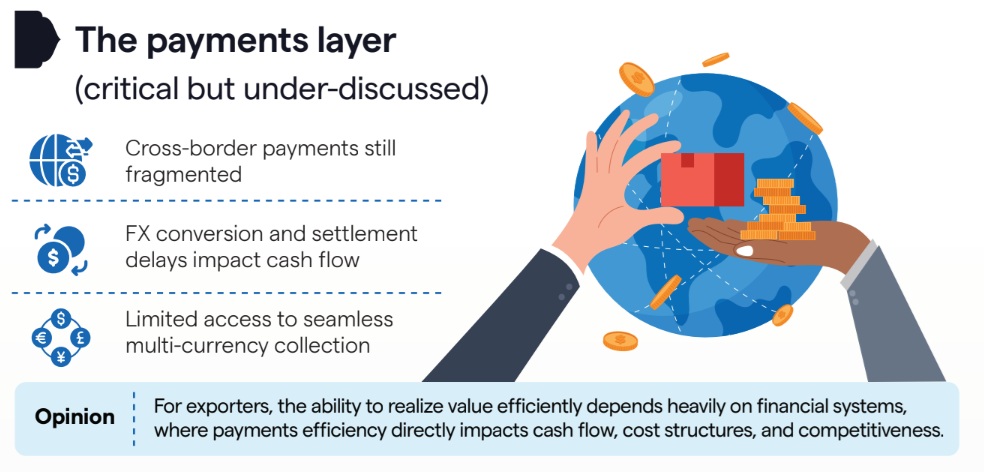
From a payments standpoint, PayGlocal enables exporters with seamless cross-border
collections, faster and predictable settlements, transparent reconciliation, and built-in
compliance support. Our goal is to ensure that payments are no longer a friction point, but a
strong enabler of global growth. ”
Anshul Mahindru, Co-founder, Xportel, said:
"In global trade today, resilience is no longer about scale alone, it’s about how quickly
businesses can adapt their logistics systems to changing demand. Delays, inefficiencies, and lack
of visibility across supply chains can slow growth significantly. What’s becoming critical is the
ability to build agile logistics networks that maintain speed, cost efficiency, and control. That’s
where long-term competitiveness is being defined."
Sumedh Sachdev, Founder and CEO, Lucria Consult, added:
"Indian exporters don’t have a demand problem, they have a systems problem. For years, growth
has been driven by relationships and manual processes, but that model doesn’t scale globally.
The next phase of export growth will be led by businesses that build strong systems across
compliance, payments, and infrastructure. The winners won’t just be good manufacturers, they’ll
be well-structured global operators. The companies that will dominate between 2026 and 2030
will be the ones that build strong cross-border systems around compliance, payments, and
infrastructure, not the ones that treat them as back-office work.”
Sudeep Singh, CEO, DMSMatrix, said: "Exports rarely fail because of product or demand, they fail because the systems around them don’t work together. Logistics, payments, compliance, banking, and ecommerce need to function as one connected ecosystem. What makes The Borderless Collective relevant is that it reflects this reality, bringing these layers together to enable more coordinated and scalable globalgrowth."
The conversations at the Jaipur Export Baithak brought together leaders across these domains to
discuss what it truly takes to build and scale global businesses from India. The focus was not just
on access to international markets, but on building the infrastructure required to sustain growth.
India’s exporters, particularly MSMEs, continue to play a critical role in driving the country’s
global trade ambitions. However, unlocking their full potential will require more than
opportunity, it will require alignment across the ecosystem that supports them.
With The Borderless Collective, PayGlocal aims to create a platform where these systems,
partners, and conversations come together, enabling exporters to move from fragmented growth
to structured, scalable global expansion.
