Tactile Triumphs: Braille, Rights and Inclusion in India
FinTech BizNews Service
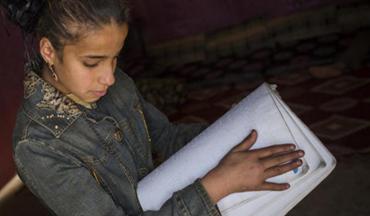
Mumbai, 4 January 2026: Observed every year on 4th January, World Braille Day foregrounds Braille not merely as a reading system, but as a gateway to education, dignity and equal participation for persons with visual disabilities. This significance is mirrored in India’s efforts to adopt and standardise Braille for inclusive learning. The Braille script was introduced in India in 1887. But, in 1951, a single national standard, Bharati Braille, was adopted with the common codes for Indian languages.
|
According to the 2011 Census, there are 50,32,463 persons with visual impairment in India, who face significant barriers in accessing healthcare, education, and employment. Recognising the needs of this population, Braille in India is embedded in a rights-based ecosystem anchored in initiatives, acts and polices like the Rights of Persons with Disabilities Act, 2016, and the National Education Policy (NEP) 2020 and others. These efforts position Braille as both a literacy tool and a public accessibility norm.
What is Braille and How Does It Work?
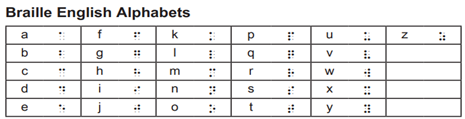
Braille is a tactile writing and reading system used by people who are blind or have low vision. It is based on a six-dot cell, arranged in two columns of three dots each. Different combinations of raised dots represent letters, numerals, punctuation marks and symbols, enabling users to read through touch.
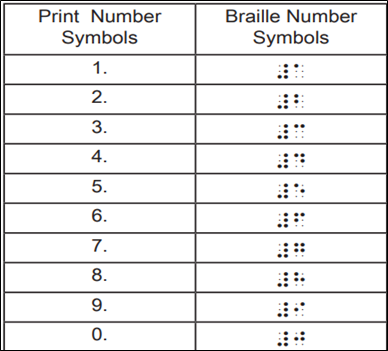
Braille (named after its inventor in 19th century France, Louis Braille) is not a language but a code that allows multiple languages to be read and written in tactile form.
Significance of Braille
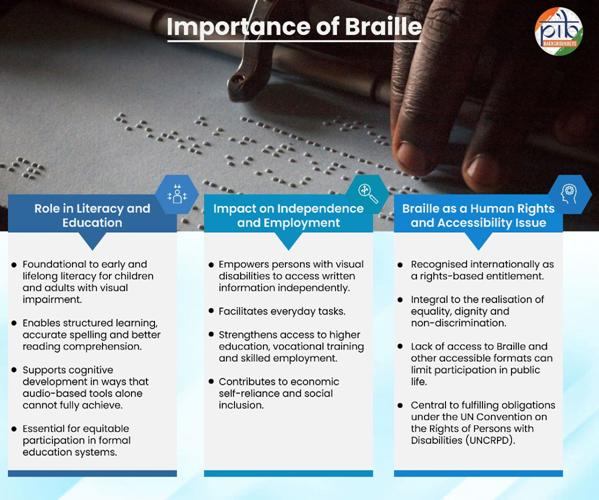
Braille plays a vital role in ensuring literacy, independence, and empowerment for persons with visual impairment. It is central to inclusive education and equal participation in social and economic life.
India, as a State Party to the UN Convention on the Rights of Persons with Disabilities (UNCRPD), is committed to ensuring access to information and education in accessible formats, including Braille.
Government of India: Policy and Programme Ecosystem Supporting Braille
The Government of India has established a comprehensive ecosystem to promote the development, dissemination, and use of Braille as a vital tool for inclusion and empowerment of persons with visual impairment. Rooted in constitutional commitments to equality, dignity, and social justice, these initiatives span education, social welfare, skill development, and digital accessibility.
1) Legal foundation: Rights of Persons with Disabilities Act, 2016 (RPwD Act)
India’s Braille ecosystem is anchored in a rights-based legal framework through the Rights of Persons with Disabilities Act, 2016. The Act mandates inclusive education for persons with disabilities, making Braille access and literacy a core requirement.
2) Bharati Braille: India’s Standardised Braille Script
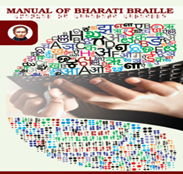
The Government of India recognises Bharati Braille as the unified script for multiple Indian languages. Under the aegis of the Department of Empowerment of Persons with Disabilities and the National Institute for Empowerment of Persons with Visual Disabilities (NIEPVD), a Standard Bharati Braille Code (with Unicode mapping) has been published on 04 January 2025 with official adoption of a consistent Braille system across Indian languages for education and accessibility. The same has been adopted after public consultation on the draft, which was published on 03 December 2024.
How Bharati Braille Works
1. Unified Braille System for Indian Languages
2. Standardisation and Unicode Mapping
3. Consistent Representation Across Languages
4. Basis for Teaching, Publishing and Digital Accessibility
Recent Initiatives:
3) Accessible India Campaign: Strengthening Inclusive Access in Infrastructure, Mobility, and Information and Communication Technologies
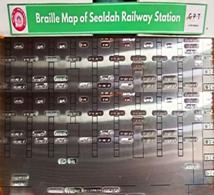
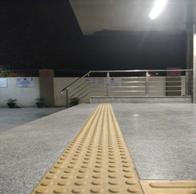
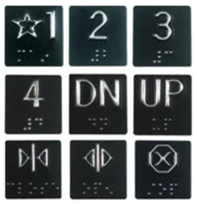
The Accessible India Campaign (Sugamya Bharat Abhiyan) is India's national initiative, launched in 2015, by the Department of Empowerment of Persons with Disabilities (DEPwD), to create a barrier-free, inclusive environment for Persons with Disabilities (PwDs), including persons with visual impairment. The campaign adopts a holistic approach to accessibility by addressing the built environments (buildings, transport), the information & communication ecosystem (websites, media), and transportation systems universally accessible. It focuses on retrofitting buildings and public spaces with Braille signage (covering 2,000+ railway stations), improving infrastructure at railways, metro stations and airports, and implementing national website accessibility guidelines.
4) NEP 2020’s Braille integration
The National Education Policy (NEP) 2020 explicitly recognises that inclusion needs practical learning supports—assistive devices and accessible teaching-learning materials, including Braille.
5) Higher education and institutional accessibility to Braille
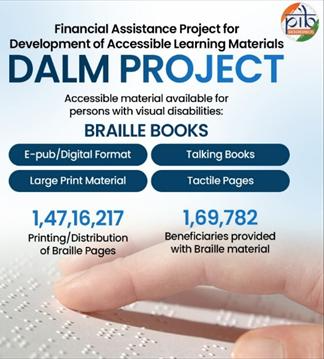
As students with visual disabilities move into higher education, Braille and other accessible formats need to be integrated into mainstream academic systems. Government-supported digital libraries and institutional mandates are enabling universities to shift from ad-hoc accommodations to structured, campus-wide accessibility practices. The DALM Project supports the students with visual impairment pursuing higher education through provision of free Braille Books through its implementing agencies.
Sugamya Pustakalaya
It is a comprehensive digital library for persons with visual and other print disabilities, with accessible books in multiple languages and links to global sources. It was initiated as a collaborative effort of NIEPVD (National Institute for Empowerment of Persons with Visual Disabilities), along with Tata Consultancy Services and a non-profit organisation called the Daisy Forum of India. The portal offers availability of books and learning materials in digital Braille format. Institutions involved are required to:
6) Programmes that fund and operationalise Braille learning materials
The Government of India has created dedicated funding mechanisms to translate Braille access into real, scalable learning materials. These programmes focus on mass production, free distribution and institutional capacity-building to ensure that students with visual disabilities are not excluded due to lack of accessible content.
DALM (Project on Financial Support for Development of Accessible Learning Materials)
The DALM Project (earlier known as the “Braille Press Project”), implemented under the SIPDA (Scheme for Implementation of the Persons with Disabilities Act), provides free Braille textbooks and course materials to persons with visual impairment across India, covering both school and higher education. Since its inception in 2014, the project has distributed accessible-format school textbooks and other learning materials to 1,69,782 students.
7) Capacity building that sustains Braille (training, special education)
Government bodies and statutory regulators play a critical role in standardising training, accrediting institutions and maintaining professional quality across the country. NIEPVD, Dehradun, is conducting various training programmes for the promotion of Braille literacy and Braille development activities.
Rehabilitation Council of India
The Rehabilitation Council of India (RCI) is a statutory body of the Government of India established under the Rehabilitation Council of India Act, 1992. It came into existence on 22 June 1993 when the Act was enacted by Parliament. An amendment in 2000 broadened its scope. Its objectives are:
Core Institutions and Delivery Ecosystems |
|
Strengthen manpower development by recognising and registering vocational, national and apex disability institutions and their personnel under the Ministry of Social Justice & Empowerment.
Conclusion: Toward a Barrier-Free Future
World Braille Day underscores a simple but powerful truth: access to information determines access to opportunity. India’s evolving Braille ecosystem is rooted in law, strengthened by institutional mechanisms and aligned with the United Nations’ rights-based vision. By standardising Braille and investing in accessible learning materials, India is further strengthening the foundations of inclusive education. Integrating tactile information across public services and building professional capacity are further helping transform constitutional principles into meaningful, lived accessibility. As these efforts further expand, Braille is increasingly recognised not just as a niche accommodation, but as a vital bridge to equality, participation and dignity for persons with visual disabilities.
