The regulated entities should procure or design devices or websites / applications / software in compliance of accessibility standards for ICT Products and Services as notified by Bureau of Indian Standards; The respondents shall provide options for sign language interpretation, closed captions, and audio descriptions for visually and hearing-impaired users.
FinTech BizNews Service
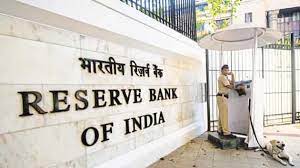
Mumbai, August 14, 2025: The RBI today directed all the REs (regulated entities) for complying with Hon’ble Supreme Court Order dated April 30, 2025 in the matter of Pragya Prasun and Ors. vs Union of India (W.P.(C) 289 of 2024) and Amar Jain vs Union of India & Ors. (W.P.(C) 49 of 2025).
The RBI drew attention of regulated entities to the Order of the Hon’ble Supreme Court dated April 30, 2025 in the matter of Pragya Prasun and Ors. vs. Union of India (W.P.(C) 289 of 2024) and Amar Jain vs. Union of India & Ors. (W.P.(C) 49 of 2025). All regulated entities shall undertake appropriate measures to ensure compliance with the above Supreme Court Order, as applicable.
The REs include all banks, all non-banking financial companies (including housing finance companies),
all all-India financial institutions, all credit information companies, all payment system providers / system participants and all authorised persons in foreign exchange.
The SC has given following directives in the matter:
In order to make the process of digital KYC accessible to persons with disabilities, especially facial / eye disfigurements due to acid attacks and visual impairments, we issue the following directions:
(i) The respondent authorities/Ministries shall direct all REs, whether government or private to follow accessibility standards as prescribed from time to time. The respondents shall appoint a nodal officer in every department responsible for digital accessibility compliance.
(ii) All regulated entities must mandatorily undergo periodical accessibility audit by certified accessibility professionals and involve persons with blindness in user acceptance testing phase while designing any app or website or in case of any new feature being launched.
(iii) Respondent No. 2/ RBI shall issue guidelines to all regulated entities to adopt and incorporate alternative modes for verifying the “liveness” or capturing a “live photograph” of the customers, as mandated under Annex-I of the MD on KYC, 2016, for the purpose of conducting Digital KYC / e-KYC beyond the traditional “blinking of eyes” to ensure inclusivity and user-convenience.
(iv) Respondent No. 2 / RBI shall issue appropriate clarifications / guidelines / directions to all regulated entities that they have Customer Due Diligence (CDD) and on-boarding of new customers can be done using the video-based KYC process or the “V-CIP” procedure, in accordance with the provisions of the MD on KYC, 2016, wherein blinking of the eyes is not a mandatory requirement.
(v) The respondent authorities must design their KYC templates or customer acquisition forms to capture disability type and percentage of the customer and appropriately record as part of the account records so as to provide them accessible services or reasonable accommodations.
(vi) The respondent authorities should provide clear directions to all regulated entities to accept image of thumb impression during Digital KYC process. (
vii) Respondent No. 2 / RBI shall amend the MD on KYC so as to enhance the implementation of the ‘OTP based e-KYC authentication’ (face-to-face) to customers.
(viii) Respondent No.3 shall make the necessary amendments and/or modifications to its notification dated 05.12.2023 thereby ensuring that the paper-based KYC process for verification of customers shall continue, enabling the petitioners and other similarly placed individuals to avail an accessible alternative for completing the KYC procedure.
(ix) The respondent authorities shall provide options for sign language interpretation, closed captions, and audio descriptions for visually and hearingimpaired users.
(x) The respondent authorities shall develop alternative formats including Braille, easy-to-read formats, voice-enabled services, to disseminate government notifications and deliver public services, ensuring accessibility for all.
(xi) All regulated entities should procure or design devices or websites / applications / software in compliance of accessibility standards for ICT Products and Services as notified by Bureau of Indian Standards. (xii) The respondent authorities shall ensure that online services including e-governance platforms, digital payment systems, and e-launching platforms are accessible to persons with disabilities, thereby fostering a barrier-free digital environment.
(xiii) The respondent authorities are directed to ensure that all websites, mobile applications and digital platforms comply with the Web Content Accessibility Guidelines (WCAG) 2.1 and other relevant national standards, such as the Guidelines for Indian Government Websites (GIGW). It shall be mandatory for all Government websites to adhere to Section 46 of the RPwD Act, 2016, which requires both electronic and print media to be accessible to persons with disabilities.
(xiv) The respondent authorities shall issue appropriate guidelines to develop and implement a mechanism where customers who have already completed their KYC process with one regulated entity may authorize the sharing of their KYC information with other entities through the Central KYC Registry (CKYCR).
(xv) The respondent authorities shall establish a dedicated grievance redressal mechanism for persons with disabilities to report accessibility issues.
(xvi) The respondent authorities shall establish a mechanism for human review of rejected KYC applications in cases where accessibility-related challenges prevent successful verification. A designated human officer shall be empowered to override automated rejections and approve applications on a case-by-case basis. (
xvii) The respondent authorities shall establish dedicated helplines for persons with disabilities, offering step-by-step assistance in completing the KYC process through voice or video support.
(xviii) Respondent No. 2 / RBI shall routinely initiate public campaigns through press release/ advertisement in electronic/ print and social media portals and to raise awareness, increase sensitization, and ensure effective dissemination of information about alternative methods of conducting Digital KYC / e-KYC and circulate standardized materials and mandate all regulated entities to display notices containing such information.
(xix) The respondent authorities should mandate inclusion of disability awareness and training modules as part of e-learning modules for officials of regulated entities for better sensitization of officials.
(xx) Respondent No. 2 / RBI shall monitor and ensure strict adherence by all regulated entities to the guidelines / notifications / directions issued by it, including those in terms of directions issued by this Court in the instant Writ Petition.
