The mega-project will be established in Dighi, Raigad district, as part of a specialized Greenfield Shipbuilding Cluster
FinTech BizNews Service
Mumbai, 02 November, 2026: Maharashtra will shortly unveil a maritime development policy that it says will be the most investor-friendly in India. The state is competing with its coastal neighbours for a share of the country’s shipbuilding and port investment boom.
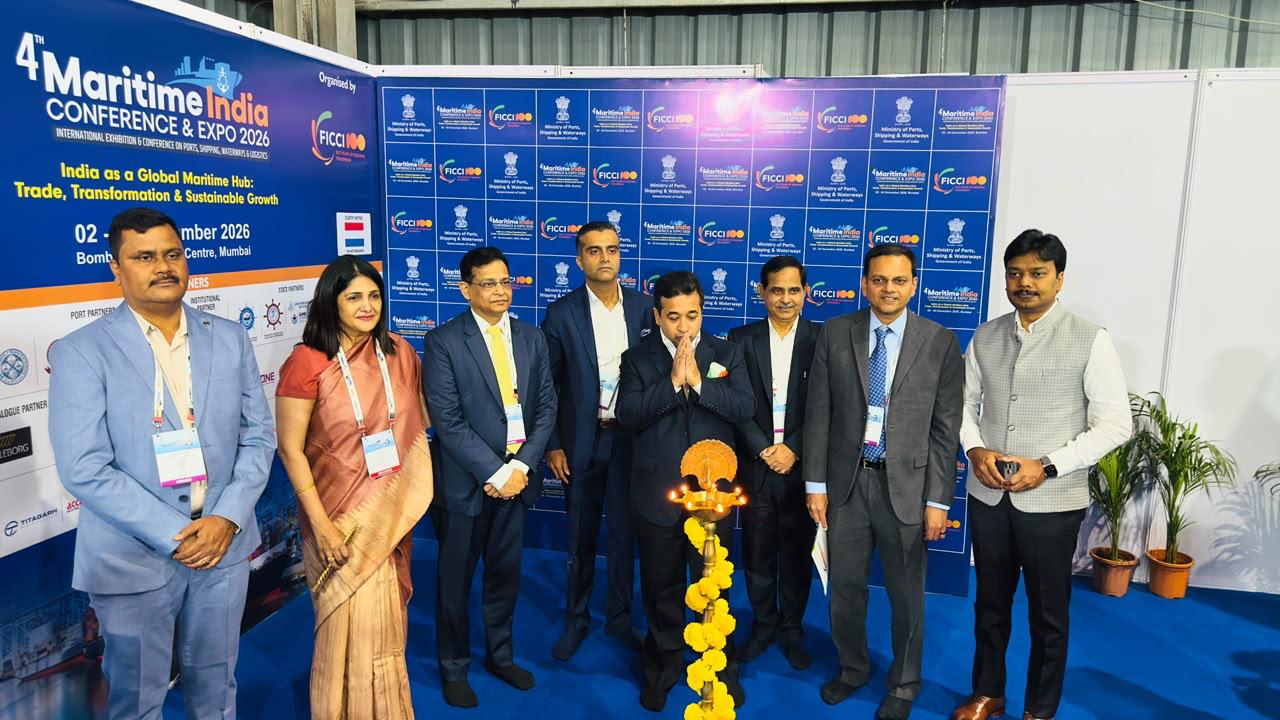
Shri Nitesh Narayan Rane, Minister of Fisheries and Ports Development, Government of Maharashtra, told the inaugural session of the FICCI’s Maritime India Conference & Expo 2026 that investors would receive “red carpet treatment” and single-window clearance. He cited a tripartite agreement signed last month between the state, the Union government and Mazagon Dock Shipbuilders. The agreement covers what he called the country’s largest shipyard, with an investment of Rs26,500 crore and employment for about 50,000 people.
Nitesh Rane today announced that a historic Rs26,500 crore tripartite agreement has been finalized between Mazagon Dock Shipbuilders Limited (MDL), the Central Government, and the Maharashtra Government to build India's largest shipyard.
Speaking at the inauguration of the fourth Maritime India Conference & Expo 2026 organized by FICCI in Mumbai, Minister Rane highlighted key details regarding this major greenfield infrastructure push:
Mr Vijay Sankar, President-Elect of FICCI and Chairman of Sanmar Group, said India’s major ports had handled a record 915mn tonnes of cargo in 2025-26, exceeding the target with growth of 7 per cent. He said the Union government’s ₹70,000 crore package for shipbuilding and the maritime sector was “a significant opportunity” for states.
“India’s maritime transformation is not simply an infrastructure story,” Sankar said. “It is a story of economic competitiveness, strategic capability and national ambition.” He set out three priorities raised by FICCI members: infrastructure that works as one integrated system, industry investment to match policy support, and capturing more value from the trade India handles, including more Indian cargo on Indian ships.
The Netherlands, partner country for the fourth edition of the conference, used the platform to push for commercial results from its newly elevated strategic partnership with India. H.E. Mr Thierry Van Helden, Consul and Deputy Head of Mission at the Netherlands Consulate General in Mumbai, said the real test of the India–Netherlands Green and Digital Sea Corridor would be “turning that ambition into projects that make commercial sense”. He announced that a dedicated Dutch shipbuilding delegation would visit India in February 2027.
Mr Dhruv Kotak, Chair of the FICCI Committee on Ports & Shipping and Managing Director of JM Baxi, urged global shipbuilders, component makers and OEMs to take a closer look at India. He cited strong demand for vessels, skilled labour and supportive policy. He said JM Baxi was investing across every segment it was promoting, “putting our money where our mouth is”.
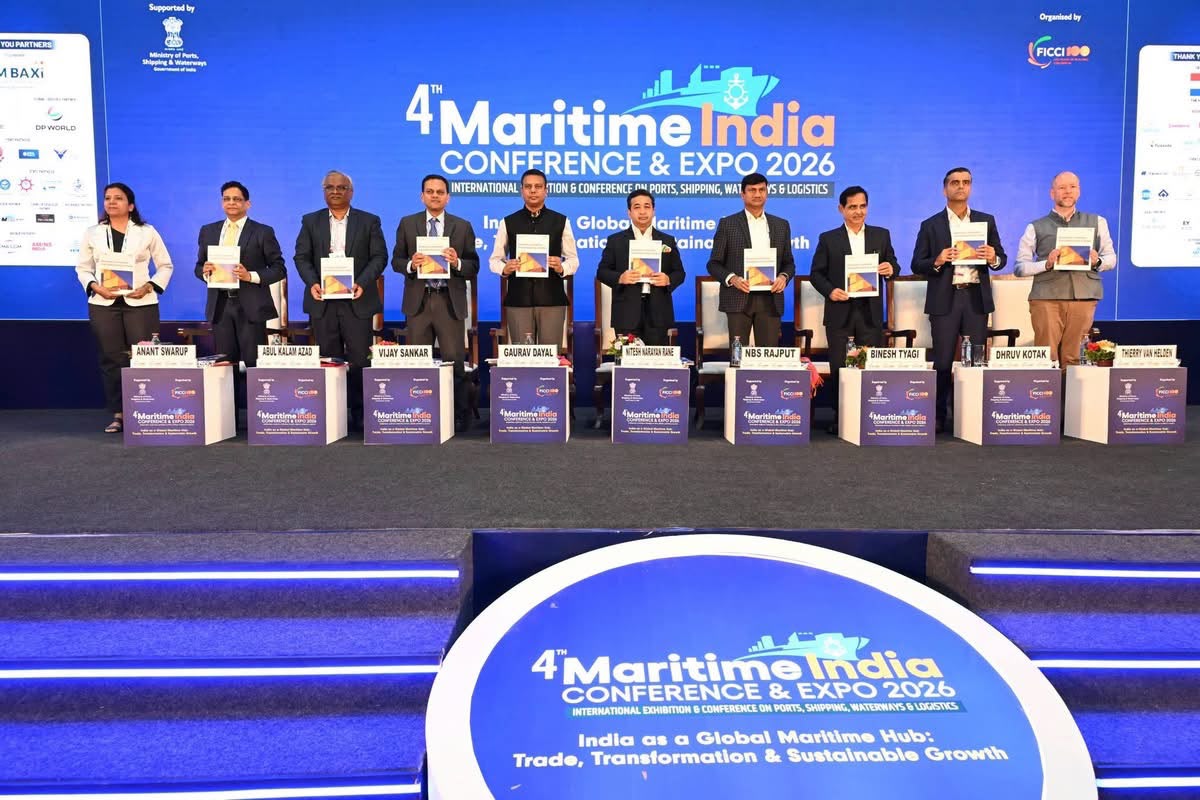
Officials from the Union and state governments reinforced the case for investment. Mr SI Abul Kalam Azad, Nautical Adviser and Additional Director General (Nautical) at the Directorate General of Maritime Administration, said that ships could now be registered within 24 hours, a timeline guaranteed in law. Mr Binesh Tyagi, Chairman and Managing Director of the Shipping Corporation of India, said the government had already aggregated demand for oil and gas tankers and container vessels, giving shipyards visible orders, and urged investors to build large yards in India. Mr Gaurav Dayal, Chairperson of Jawaharlal Nehru Port Authority, said the port had handled more than 8mn TEUs last year and expected to exceed 9mn this year. Mr NBS Rajput, Principal Secretary for Commerce and Transport in the Government of Odisha, invited shipbuilders and equipment makers to the state’s proposed shipbuilding cluster in Kendrapara district and the Puri International Cruise Terminal.
FICCI released four knowledge reports at the inaugural session, prepared in collaboration with PwC, Kearney, EY and Crisil Intelligence. The reports examine the development of smart and future-ready ports, improvements in hinterland connectivity and cargo evacuation, the scaling up of India's shipbuilding and ship repair capacity, and opportunities to establish a globally competitive domestic container manufacturing industry.
The FICCI–Crisil report, Domestic Container Manufacturing in India, finds that Indian-made containers face a manufacturing cost disadvantage of $650–800 per twenty-foot equivalent unit (TEU) compared with Chinese containers, with Corten steel accounting for about half of the indicative cost gap.
The report comes days after the Union Cabinet approved the ₹10,000-crore Container Manufacturing Promotion Scheme, which targets annual manufacturing capacity of 7.5 lakh TEUs. China accounts for more than 95 per cent of global container production, while India's growing maritime trade and dependence on repositioned empty containers highlight the case for domestic manufacturing.
The report suggests that India could target 8–10 per cent of global container manufacturing capacity, equivalent to 480,000–600,000 TEUs annually, within five years. It recommends a coordinated national container manufacturing mission, competitive access to container-grade steel, port-linked manufacturing clusters, testing and certification infrastructure, and assured procurement commitments from shipping lines and leasing companies.
