Unique investors have risen to 15.4 crore, more than double the roughly 7 Crore of four and a half years ago.
FinTech BizNews Service
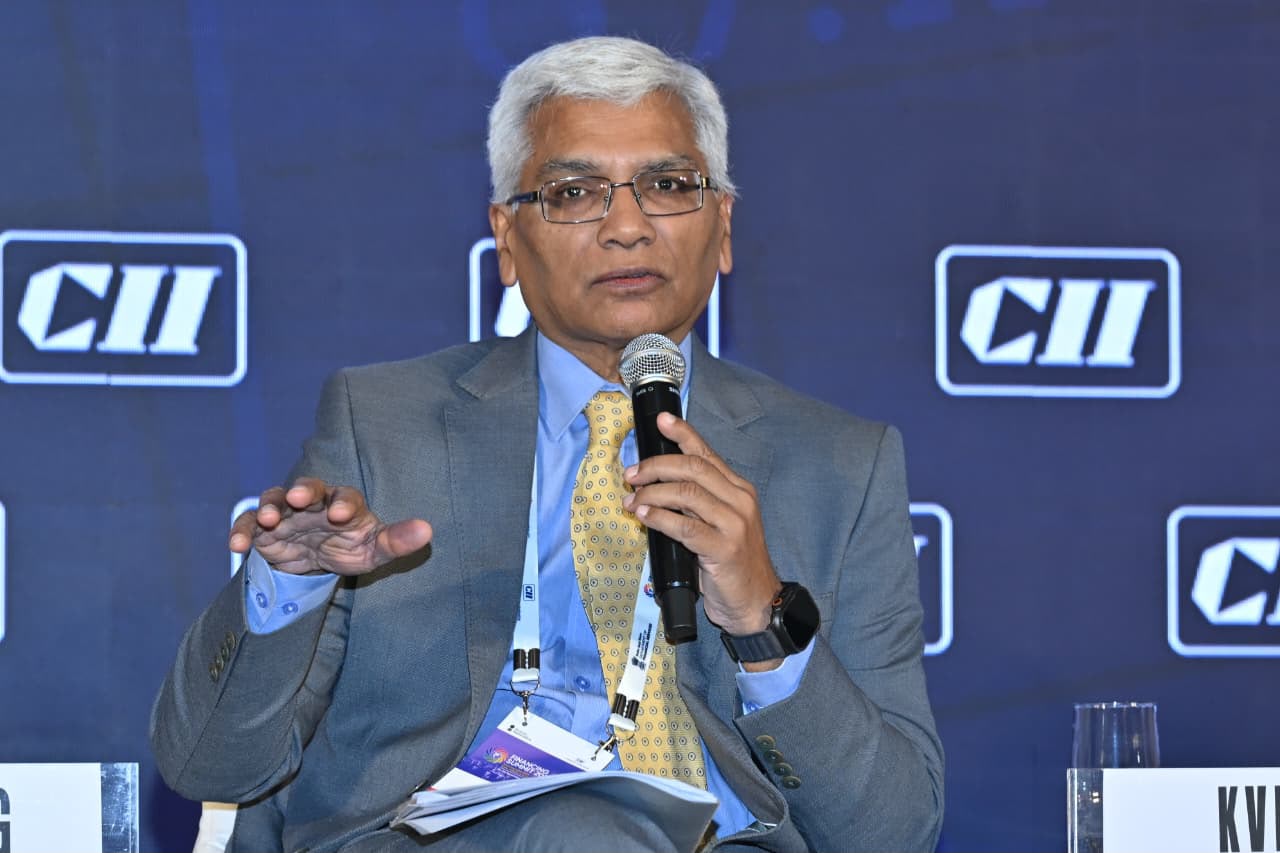
Mumbai, 19 November, 2026: India now has more than 24 crore demat accounts as of 31 October 2026. “This reflects wider market access across Tier-2 and Tier-3 India. Unique investors have risen to 15.4 crore, more than double the roughly 7 crore of four and a half years ago. SIPs continue to be the bedrock of steady retail capital formation, and trust remains the market’s true infrastructure," stated K V R Murty, Whole-Time Member, Securities and Exchange Board of India (SEBI) during the session "Financing India's Future Growth" at the CII Financing Summit 2026 today.
Shri K V R Murty highlighted the importance of deep and resilient capital markets in supporting India's long-term growth ambitions. Addressing participants at the CII-DFS Financing Summit 2026, Shri Murty noted that while bank-led credit remains an important driver of economic growth, sustaining a real GDP growth trajectory of around 8.0% would require greater mobilisation of domestic household savings and global institutional funds through transparent securities markets. Sustaining a multi-decade growth trajectory towards achieving Viksit Bharat requires deep risk-bearing, long-term capital formation through transparent securities markets.
Emphasising the importance of investor confidence and market stability, Shri Murty said that “ultimately, it is trust which is our true market infrastructure”. He highlighted SEBI's efforts to strengthen market infrastructure, cybersecurity and investor protection through measures such as the Cybersecurity and Cyber Resilience Framework, the T+1 settlement cycle and technology-led initiatives including Project Sudarshan and the Cyber Suraksha portal. He also noted that growing participation by retail investors and domestic institutional investors has helped Indian markets withstand volatility arising from foreign portfolio outflows.
On fiscal and monetary coordination, Shri Murty emphasised that long-term infrastructure financing requires deeper debt and equity markets, complementing the Government's public capital expenditure and bank-led credit. He highlighted SEBI's Demat 2.0 corporate bond tokenisation pilot project, which integrates with the Reserve Bank of India's wholesale Central Bank Digital Currency system to facilitate instantaneous settlement of corporate bonds. Referring to the Union Budget 2026–27, he outlined SEBI's efforts to deepen corporate and municipal bond markets, simplify capital-raising processes and expand long-term financing avenues through AIFs, REITs and InvITs. He stressed that optimal regulation, stronger market infrastructure and greater access to patient capital would be essential to supporting India's next phase of growth.
