Prime Minister Modi’s Visit to the UAE Advancing Energy, Technology, Connectivity and Strategic Cooperation
FinTech BizNews Service
Mumbai, 15 May 2026: India and the United Arab Emirates share a long-standing relationship shaped by trade, cultural exchanges, and strong community connections across the Arabian Sea.
15th May 2026: Prime Minister Visit to UAE
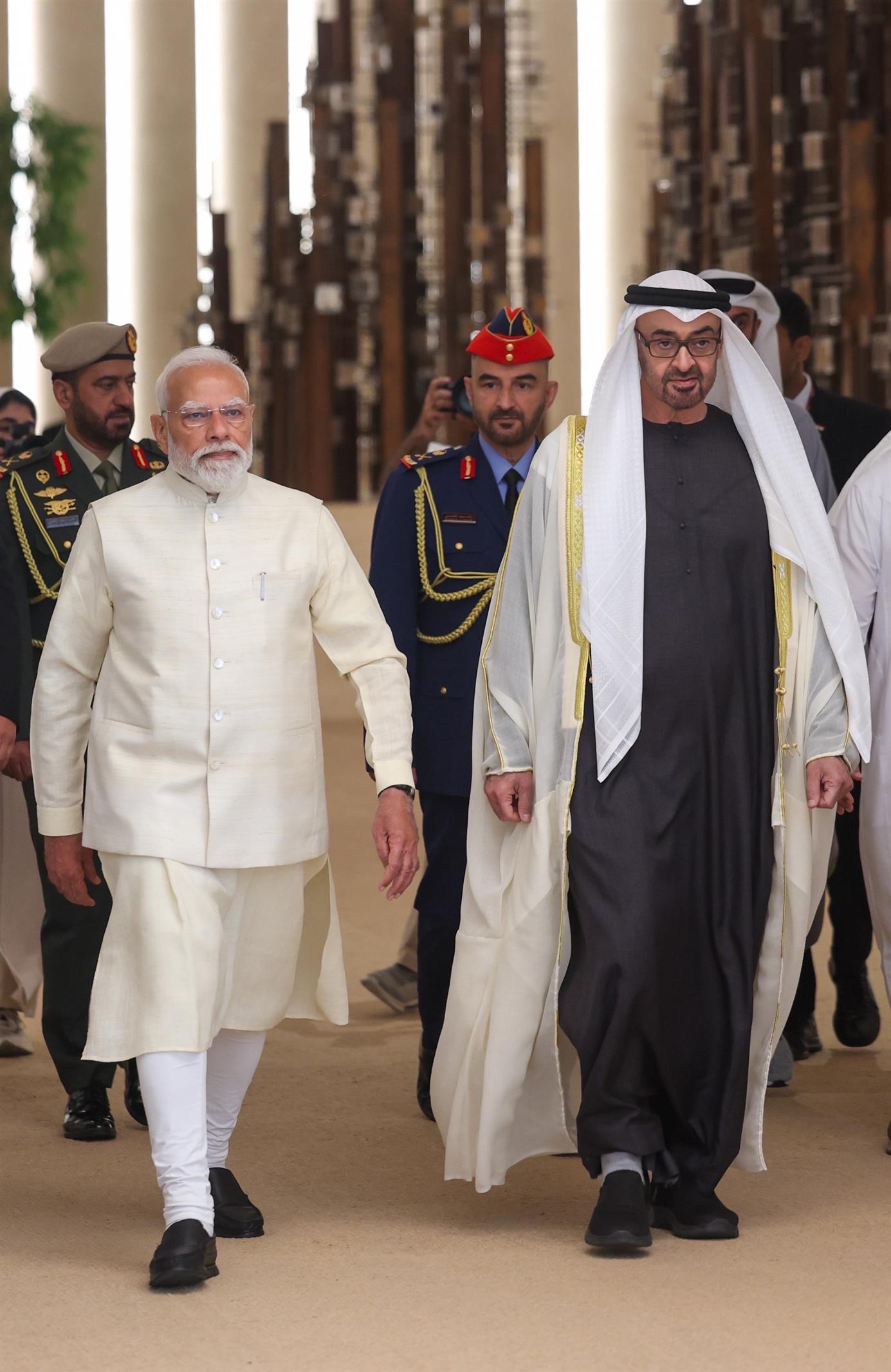
Prime Minister Narendra Modi visited the United Arab Emirates on 15 May 2026 and held discussions with UAE President Sheikh Mohamed bin Zayed Al Nahyan. The visit reaffirmed the strong momentum in the bilateral strategic partnership. Both countries committed to expanding cooperation across strategic, economic, technological, and social sectors. The discussions also emphasized resilient supply chains, long-term economic collaboration, and growing convergence on regional and global priorities.
Key Outcome and its Strategic Importance
The PM visit marks another significant step in the expanding India–UAE bilateral Partnership. The outcomes span critical sectors, reflecting the growing strategic convergence between the two countries. These will strengthen long-term economic resilience, technological collaboration, and regional connectivity.
Outcome 1: MoU on Strategic Collaboration between Indian Strategic Petroleum Reserves Limited (ISPRL) and Abu Dhabi National Oil Company (ADNOC)
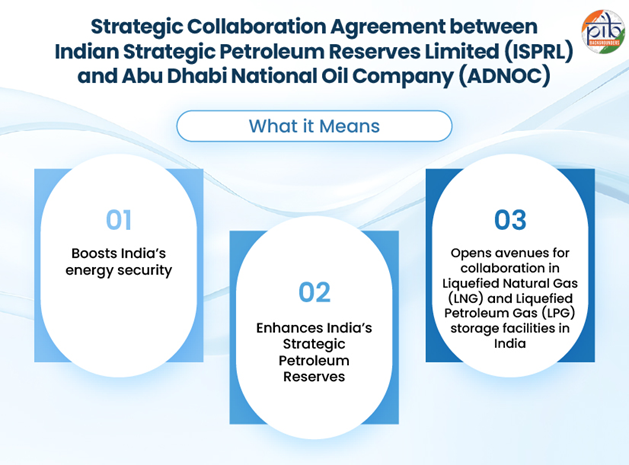
The agreement will strengthen India’s energy security through deeper cooperation in the hydrocarbons sector. It will ensure reliable access to critical energy resources. The partnership will also enhance India’s Strategic Petroleum Reserves framework. This will improve resilience against global supply disruptions and energy market volatility.
The agreement will create new opportunities in Liquefied Natural Gas (LNG) and Liquefied Petroleum Gas (LPG) storage infrastructure. It will support India’s efforts to diversify energy sources and expand storage capacity. The partnership will also help build a secure and future-ready energy ecosystem.
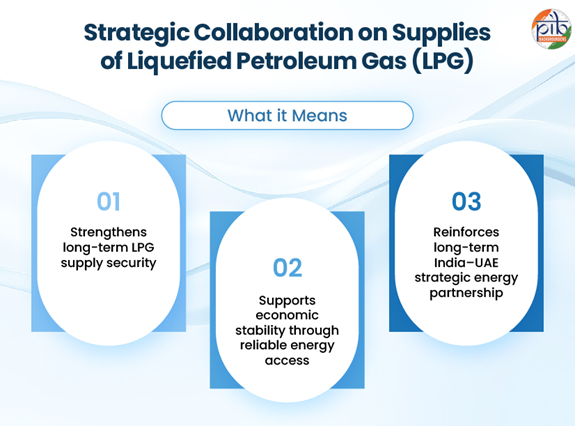
Outcome 2: Strategic Collaboration Agreement between Indian Oil Limited (IOCL) Company and Abu Dhabi National Oil Company (ADNOC) on supplies of Liquified Petroleum gas (LPG)
The collaboration will strengthen India’s long-term LPG supply security. It will ensure a stable and reliable energy source for domestic demand. The initiative will also deepen strategic energy cooperation between both countries. It will further reinforce the UAE’s position as one of India’s most trusted energy partners.
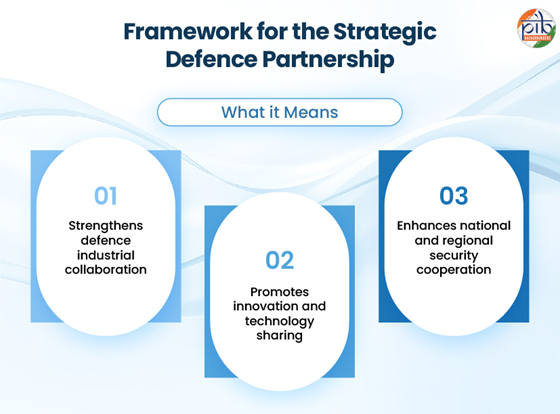
Outcome 3: Framework for the Strategic Defence Partnership
The framework will strengthen defence industrial cooperation between both countries. It will encourage joint partnerships, co-development, and greater industry engagement. The agreement would also promote innovation and technology sharing in strategic sectors. This will support cooperation in advanced defence manufacturing and capabilities. At the broader level, the partnership is expected to enhance national and regional security cooperation.
Outcome 4: MoU between Cochin Shipyard Limited (CSL) and Drydocks World (DDW) on setting up Ship Repair Cluster at Vadinar, Gujarat
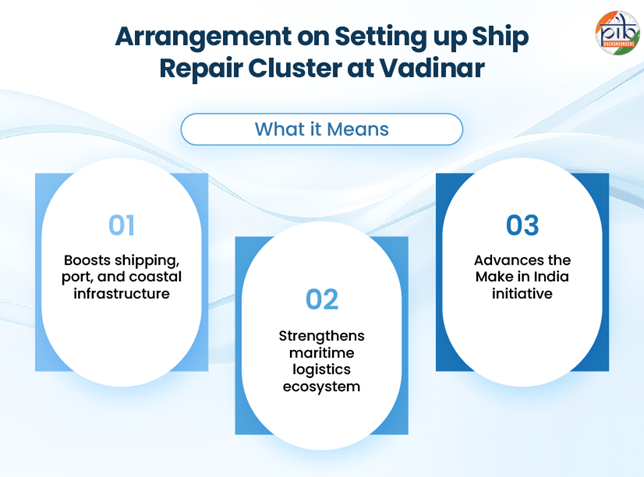
The initiative will boost shipping, port, and coastal infrastructure development. It will strengthen India’s position as a growing maritime and logistics hub. The collaboration will also improve the maritime logistics ecosystem. It will enhance ship repair and allied industrial capabilities. This will support efficient trade and connectivity. The partnership will also advance the Make in India initiative. It will promote domestic manufacturing, infrastructure development, and indigenous maritime capabilities.
Outcome 5: MoU between Cochin Shipyard Limited (CSL), Drydocks World (DDW) and Centre of Excellence in Maritime & Shipbuilding (CEMS) on Skill Development in Ship Repair
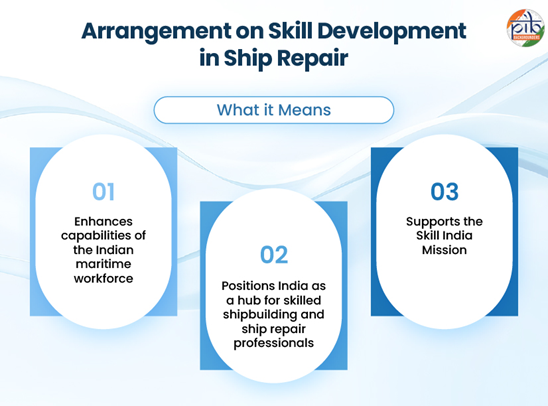
The arrangement will strengthen the capabilities of the Indian maritime workforce. It will support specialised training, technical upskilling, and capacity-building in shipbuilding and ship repair. The initiative will also support India’s emergence as a global hub for skilled maritime professionals. It will strengthen industry-ready expertise and expand opportunities in the maritime sector. The collaboration also aligns with the objectives of the Skill India Mission. It will help create a future-ready workforce for the evolving global maritime industry.
Outcome 6: Term Sheet for setting up 8 Exaflop Super Computing Cluster in partnership between CDAC, India and G-42, UAE
The partnership will accelerate India’s sovereign AI and high-performance computing capabilities. It will strengthen the country’s supercomputing infrastructure. The collaboration will also boost the IndiaAI Mission. It will support digital innovation, AI research, and next-generation technological development.
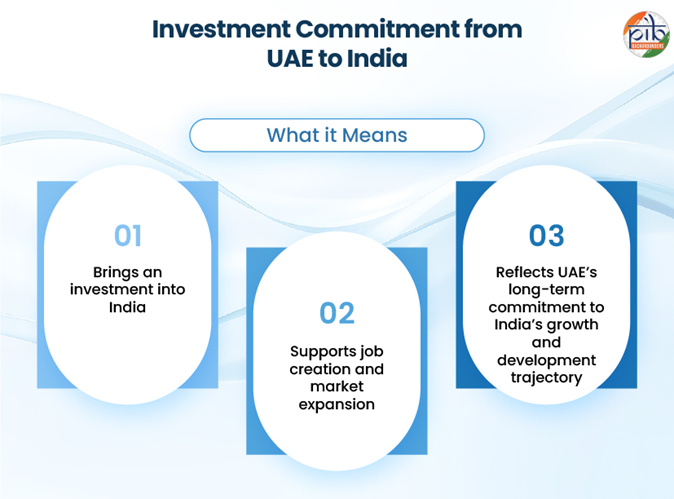
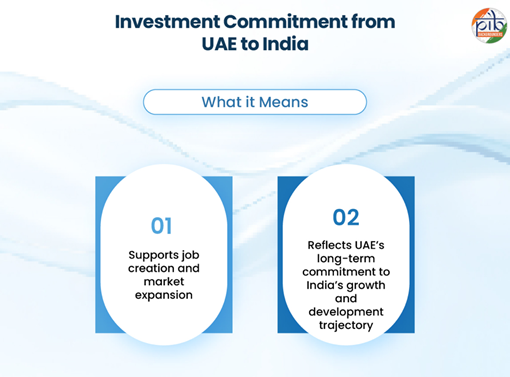
Outcome 7: Investment from UAE to India
The investment commitments will strengthen economic and financial cooperation between both countries. They will boost investments in India’s infrastructure and banking sectors. The commitments will also enhance long-term capital flows and investor confidence. They will support India’s economic development and infrastructure expansion goals.
Overall, the outcomes of the Prime Minister’s visit reflect the transformation of bilateral ties into a future-oriented strategic partnership. The cooperation is anchored in trust, innovation, and shared prosperity. The agreements deepen collaboration across traditional sectors such as energy, trade, and defence. They also open new opportunities in frontier technologies, logistics, digital infrastructure, and advanced manufacturing.
Towards a Future-Ready India–UAE Partnership
The relationship between India and the UAE has transformed from traditional trade linkages into a wide-ranging strategic partnership. Sustained political engagement and economic cooperation have driven this transformation. Today, the partnership spans energy security, trade, technology, investment, and defence cooperation.
The outcomes of the Prime Minister’s 2026 visit have further strengthened bilateral ties. They expand cooperation in emerging technologies, maritime infrastructure, artificial intelligence, and strategic industries. As both countries align their economic and geopolitical priorities, the partnership is expected to play a larger role in regional stability, economic growth, and technological advancement in the coming years.
From Historical Ties to a Comprehensive Strategic Partnership
Trade in pearls, dates, spices, textiles, and fisheries connected western India with the Gulf region for centuries. Formal diplomatic relations were established in 1972, followed by the opening of embassies in Abu Dhabi and New Delhi.
Bilateral ties gained new momentum after Prime Minister Narendra Modi visited the UAE in 2015, the first visit by an Indian Prime Minister in 34 years. PM Modi has visited UAE seven times since 2014 and UAE President Sheikh Mohamed bin Zayed Al Nahyan has visited India 5 times. During this period, cooperation has expanded across trade, investment, energy, technology, defence, and the digital economy. The UAE is now one of India’s largest trading partners, a major energy supplier, and a key investor in infrastructure and renewable energy.
Trade and Investment ties: Bilateral merchandise trade between the two countries crossed US$100 billion for the first time, reaching US$101.25 billion in FY 2025-26. Both sides have committed to doubling bilateral trade to US$200 billion by 2032.
Investment has also become a significant component of this bilateral relationship. The two nations signed the Bilateral Investment Treaty in February 2024 which entered into effect from 31 August 2024. From April 2000 to March 2025, the cumulative FDI from the UAE into India amounted to US$25.19 billion, making UAE the seventh-largest overseas investor in India. UAE’s investments are well-diversified with focus on sectors like real estate, infrastructure, energy, private equity and financial services. UAE’s Sovereign Wealth Funds (SWF) have a strong presence in India. Local Currency Settlement (LCS) system between India and the UAE is in place, enabling bilateral trade and remittances to be settled in INR and AED, reducing dollar dependence and transaction costs.
Energy Trade: India and the UAE share a close and dynamic partnership, particularly in the areas of the hydrocarbon sector. In FY 2024-25, the UAE stood as the fourth largest source of crude oil, third largest source of LNG, largest supplier of LPG and second largest export destination for India’s finished petroleum products. Currently, the UAE is the only country participating in India’s Strategic Petroleum Reserve programme
Bilateral Connectivity: Apart from energy and trade, connectivity and logistics cooperation are also emerging as important pillars of the bilateral partnership. Both countries are working to strengthen maritime connectivity
Defence Cooperation: Bilateral defence cooperation between India and the UAE has been steadily growing in consonance with other domains of the bilateral relationship. It is steered through a Joint Defence Co-operation Committee (JDCC) at the Ministry level, with the signing of MoU on Defence Cooperation in June 2003. At Service HQ level, Service (Army, Naval and Air) Staff Talks are held annually to discuss security and defence cooperation avenues.
People-to-people ties: Indians constitute the largest group of expatriates in the UAE. They form the backbone of the UAE economy and society. Their wellbeing is important to both countries. Despite the challenges to the global economy, the diaspora remains a consistent source of remittance to India, having a positive impact on the forex reserves.
