Excise Duty On Petrol & Diesel Slashed; PM chairs meeting with CMs to review preparedness in light of emerging situation in West Asia crisis
FinTech BizNews Service
Mumbai, March 27, 2026: The Government of India has reduced excise duty by Rs 10 per litre on both petrol and diesel with immediate effect. This decision has been taken in response to the steep and rapid rise in international crude oil prices, which have surged from approximately USD 70 per barrel to around USD 122 per barrel over the past month — an increase of nearly 75 per cent in under four weeks, driven by the ongoing conflict in West Asia and associated disruptions to global energy supply chains.
Retail pump prices of petrol and diesel will not change. The excise reduction is not being passed on as a price cut at the pump. Instead, it directly reduces the under-recoveries being absorbed by public sector oil marketing companies (OMCs) — Indian Oil Corporation, Bharat Petroleum Corporation and Hindustan Petroleum Corporation — who have continued to supply fuel to Indian consumers at prices well below their cost of supply. At current international crude prices, under-recoveries stand at approximately Rs 26 per litre on petrol and Rs 81.90 per litre on diesel. The combined daily under-recovery being absorbed by OMCs is approximately Rs 2,400 crore. The excise reduction offsets Rs 10 per litre of these losses, ensuring OMCs can continue to supply fuel without disruption while keeping retail prices unchanged.
The contrast with global fuel markets is instructive. Fuel prices have risen by 30 to 50 per cent across South and South-East Asian countries, 30 per cent in North America, and 20 per cent in Europe since the onset of the current crisis. India has held the line. That stability carries a fiscal cost, and the Government has chosen to bear it.
The Minister for Petroleum and Natural Gas, Shri Hardeep Singh Puri, stated:
“The Government had two choices: either increase prices drastically for citizens of Bharat as all other nations have done, or bear the brunt on its finances so that the Indian citizen is insulated from international volatility. Honourable Prime Minister Shri Narendra Modi Ji decided to take a hit on Government finances to safeguard the Indian citizen. The Government has taken a substantial impact on its taxation revenues to reduce the high losses being faced by oil marketing companies at this time of sky-high international prices.”
Alongside the excise reduction, the Government has simultaneously introduced an export levy on diesel. At a time when international diesel prices have surged sharply, the levy is designed to disincentivise exports and ensure that refinery output is directed first towards meeting domestic demand. Keeping Indian pumps fully supplied takes precedence over export opportunities, however commercially attractive those may be at current global prices.
This decision is consistent with the approach adopted since the Russia-Ukraine conflict of 2022, when OMCs absorbed sustained losses and the Government cut central taxes to shield households and businesses from global price volatility. The same principle governs today’s intervention: India’s citizens and industry should not bear the cost of disruptions they did not cause. The Government will continue to monitor the evolving global energy situation and take all measures necessary to maintain supply stability and price protection for Indian consumers.
PM urges States to ensure smooth functioning of supply chains and take strict measures against hoarding and profiteering
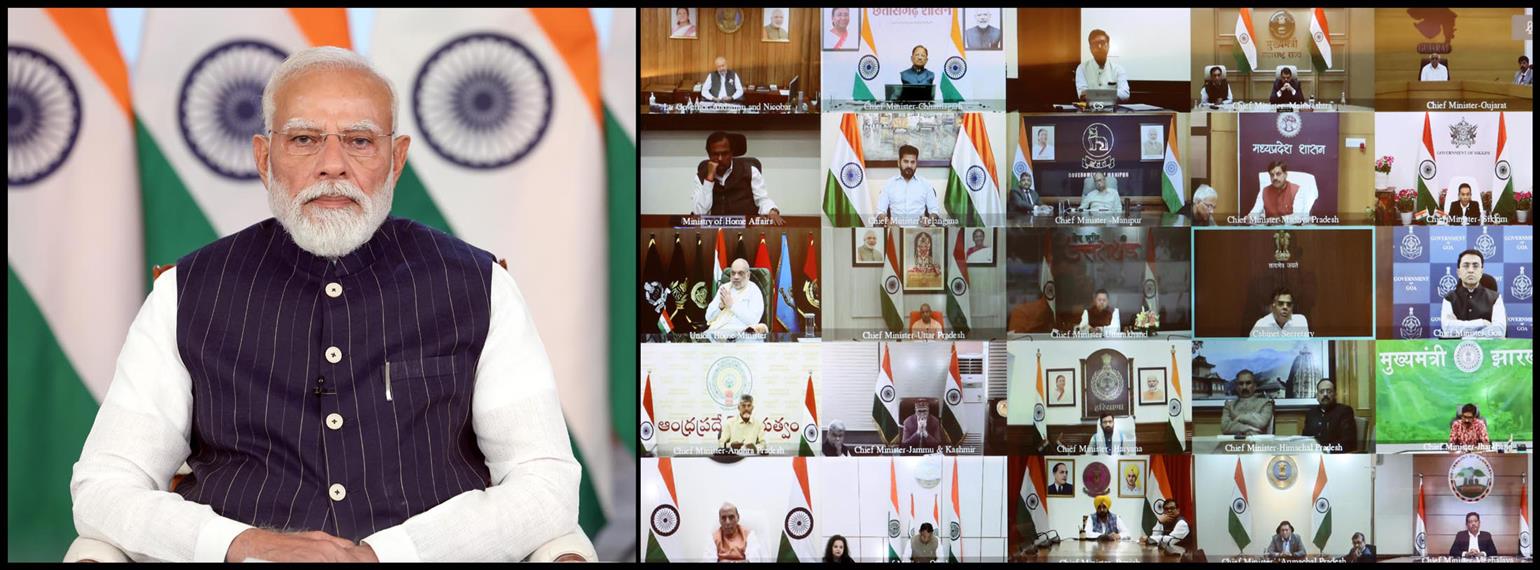
Prime Minister Shri Narendra Modi today chaired a meeting with Chief Ministers and Lieutenant Governors of States and UTs to review preparedness in light of the emerging situation arising out of recent developments in West Asia and its potential impact on India, via video conferencing.
Prime Minister expressed his appreciation for the valuable suggestions shared by all Chief Ministers, noting that these inputs would be instrumental in effectively managing the evolving situation. He emphasised the need for vigilance, preparedness, and coordinated action to address the challenges ahead.
Referring to the ongoing situation in West Asia, Prime Minister said India has prior experience in dealing with similar global disruption. He recalled the collective response during the Covid-19 pandemic, when the Centre and States worked together as “Team India” to mitigate the impact on supply chains, trade, and daily life. He underscored that the same spirit of cooperation and coordination remains India’s greatest strength in navigating the present circumstances.
Prime Minister highlighted that the situation remains dynamic, necessitating continuous monitoring and adaptive strategies. He said that an Inter-Ministerial Group has been operational since 3 March, reviewing the situation on a daily basis and taking timely decisions. He stressed that the Government’s priorities are to maintain economic and trade stability, ensure energy security, safeguard the interests of citizens, and strengthen industry and supply chains.
Emphasising the critical role of States, Prime Minister noted that effective implementation of decisions takes place at the State level. He called for constant communication and coordination between the Centre and States, along with timely sharing of information and joint decision-making, so that responses are swift and well-aligned.
Prime Minister urged States to ensure the smooth functioning of supply chains and to take strict measures against hoarding and profiteering. He highlighted the importance of activating control rooms at State and District levels and maintaining administrative alertness to prevent disruptions. He also stressed the need for advance planning in the agriculture sector, particularly in monitoring fertiliser storage and distribution, so that farmers do not face difficulties during the upcoming Kharif season.
Prime Minister cautioned against the spread of misinformation and rumours, stating that timely dissemination of accurate and credible information is essential to prevent panic. He also advised vigilance against online frauds and fake agents. PM called for special attention in border and coastal States to address any emerging challenges related to shipping, essential supplies, and maritime operations.
He underscored the importance of maintaining public confidence, noting that assurance regarding the availability of essential commodities would help prevent unnecessary panic among citizens. He further suggested that States with citizens in West Asia should activate helplines, appoint nodal officers, and establish district-level support systems to assist affected families and ensure timely flow of information.
Prime Minister stated that efforts undertaken in recent years to strengthen India’s economic and supply systems are proving beneficial in the current context. He called for continued engagement with industry and MSMEs to address their concerns and ensure stability in production and employment. He also emphasised the need for robust coordination mechanisms at all levels, including regular reviews at the level of Chief Secretaries and continuous monitoring at the district level, to enable quick response to evolving situations.
Prime Minister called for a parallel focus on immediate response and long-term preparedness. He urged States to accelerate efforts in promoting alternative energy sources such as biofuels, solar energy, GOBARdhan initiative, electric mobility, as well as expanding piped natural gas connections. He also highlighted the importance of enhancing domestic exploration of oil and natural gas, with active cooperation from States.
Prime Minister reiterated that addressing the challenge is a shared responsibility and expressed confidence that, working together as “Team India,” the nation will successfully overcome the situation.
During the meeting, Defence Minister Shri Rajnath Singh highlighted that the government has been working actively under the leadership of Prime Minister to tackle this crisis and taking positive steps such as ensuring timely availability of LPG and reducing the excise duties on petrol and diesel. He further highlighted the need for collective action from all states, UTs and the centre to tackle the ongoing situation.
Cabinet Secretary Shri T V Somanathan gave a presentation on the current situation and enumerated steps and recommendations for States to tackle the situation.
Chief Ministers appreciated the steps taken by the central government under the leadership of Prime Minister to tackle the situation. They also praised the diplomatic outreach of Prime Minister to different countries amidst this crisis to ensure the well being of Indian citizens abroad.
Chief Ministers across states expressed confidence that the situation remains stable, with adequate availability of petrol, diesel, and LPG, and continuous monitoring mechanisms in place to ensure uninterrupted supply of essential commodities. They widely welcomed the decision to reduce excise duty on fuel, noting that it will provide significant relief to citizens amid global uncertainties. Chief Ministers also welcomed the decision to increase commercial LPG allocation to states and union territories to 70% of pre-crisis levels, up from 50%. They reaffirmed commitment to work in close coordination with the Centre to effectively manage the evolving situation and safeguard the interests of citizens.
