The war benifits a select few, Harms some and remains a Drag for most....The re-balance of precious metals and Dollar Index

FinTech BizNews Service
Mumbai, March 7, 2026: Should the raging conflict in Middle East proliferate asymmetrically across jurisdictions, asset classes and supply chains, the cumulative shock could trigger a new wave of Inflation globally. India is still a notable exception, as per the SBI research report, authored by Dr. Soumya Kanti Ghosh, Group Chief Economic Adviser, State Bank of India.
Kondratieff waves perspective on current conflict
❑ The Kondratiev Wave (named after Nikolai Kondratiev) is a theorized cycle in economies driven by major technological and infrastructure investments....The duration of the cycle lasts approximately 40-60 years
❑ Both creation of Petro dollar (1974) and the Iran Revolution (1978-79) coincided with end of the 4th Kondratiev wave around 1970-1980s
❑ Depending upon the length of the wave that is roughly of 40-60 years, the 5th wave is expected to end in next 10 years
• The historical turn points for US dollar are 2014, 2024 and 2034
• Similarly, the key turning points for Iran could be 2018, 2028 and 2038
❑ Based on theorised patterns seen in end phase of Kondratiev wave, the current conflict can have long lasting impact on region and world at large
❑ Possible impact – recession, rising bankruptcy, financial turbulence, safe haven demand, social unrest and conflicts etc.
The war BENEFITS a select few, Harms some and remains a Drag for most....
❑ The USA could emerge as the single (most) beneficiary of the extended war in the Middle East thanks largely to Oil & Gas
❑ Having a huge oil and gas capacity, the US was quick to construct floating storage tankers once the Ukraine conflict dissipated the Russian supply through 2023 (Nord Stream 1, Yamal and Turk Stream that is still operational)
❑ Basis Council of the European Union data, Russia's share of EU imports of pipeline gas dropped from around 40% in 2021 to around 6% in 2025. For pipeline gas and LNG combined, Russia accounted for around 13% of total EU gas imports in 2025
❑ In January 2026, the Council adopted a regulation to prohibit both LNG and pipeline gas imports from Russia starting 18 March 2026, with transition periods for existing contracts. By the end of 2027, all Russian gas imports may be prohibited
❑ This shift away from Russian gas is made possible mainly thanks to a sharp increase in LNG imports and an overall reduction in gas consumption in the EU
❑ In 2025, the EU imported over 140 billion cubic metres (bcm) of LNG (basis Bruegel data)
❑ The US was the largest supplier of LNG to the EU, accounting for almost 58% of total LNG imports. Imports from the US tripled between 2021 and 2025
❑ With the supply-supply chain triggered squeeze anchoring higher spot and forward prices across Gas and Oil, the US enterprises could reap benefits that more than adequately compensates the spending on war
The Israeli-Iran conflict has entered the 7th day and engulfs the region, following the Saturday (28 Feb 2026) morning attack on Iran (Operation Epic Fury and Roaring Lion)
❑ Following to this, Iran has launched strikes on US assets across several countries, Bahrain, Kuwait, Qatar and UAE
❑ Iran closed ‘Strait of Hormuz’, which about 20% of the world's crude oil passes through but that masks considerable regional and country variations
❑ The immediate inflationary impact of widening conflict in the Middle East is likely to be limited. But potential trade and supply chain disruptions, weakening business sentiment and elevated uncertainty could have major consequences for the global economy
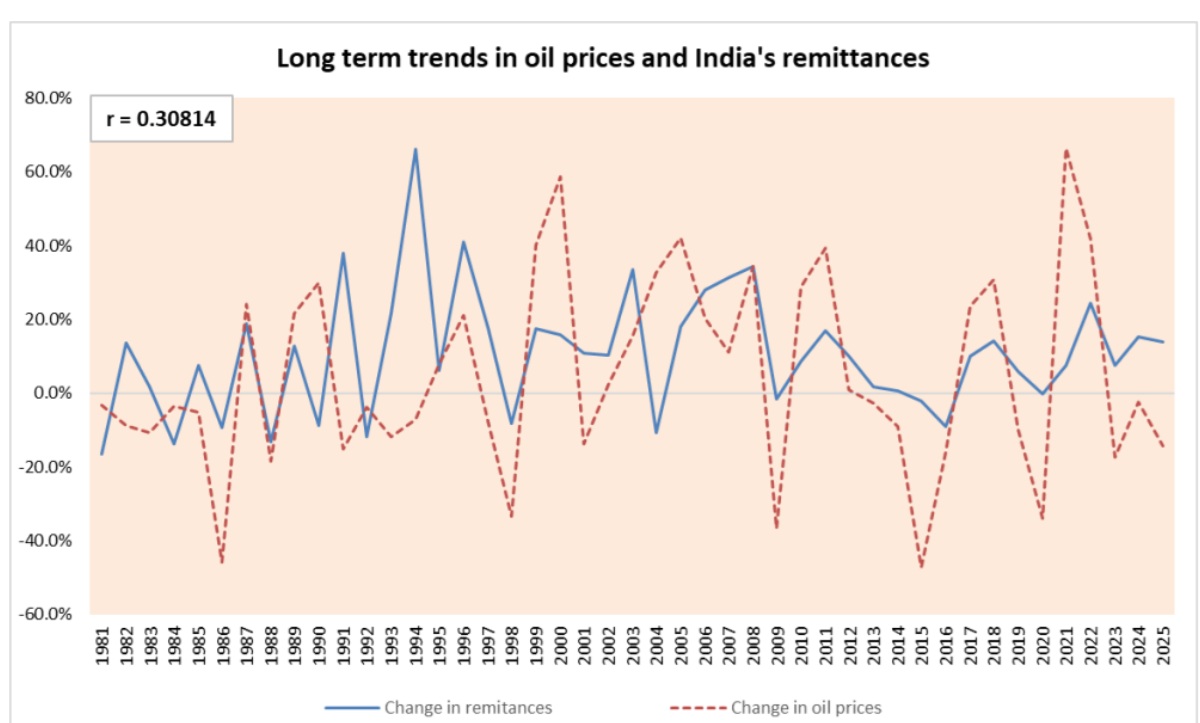
❑ The impact on India’s economy may be a short-term impact on remittances and crude oil imports... The forward contracts booked for future delivery of oil will partially be offset by reprieve on purchase of Russian oil through a 30 days window
❑ An unorthodox attempt that could emerge in the long run is US revaluing the Federal government's 261.5 million troy ounces in gold reserves—the largest reserves globally— from a statutory price of $42.22 per troy ounce (fixed in 1973 post Nixon shock) to current market prices ($5000+ per troy ounce). The corresponding revaluation reserves would create a massive jump in assets first, wiping 70% of US Budget deficit.... The US Bitcoin act Sec 9(c) (proposed in Nov2025 by Senator Cynthia M Lummis (R-WY) to Congress) also stipulates that Treasury Secretary would revalue gold at market price to purchase one million Bitcoins
