CCI aims to strike a balance ensuring strong deterrence against anti-competitive conduct and innovation driven market environment: Ravneet Kaur, Chairperson, Competition Commission of India
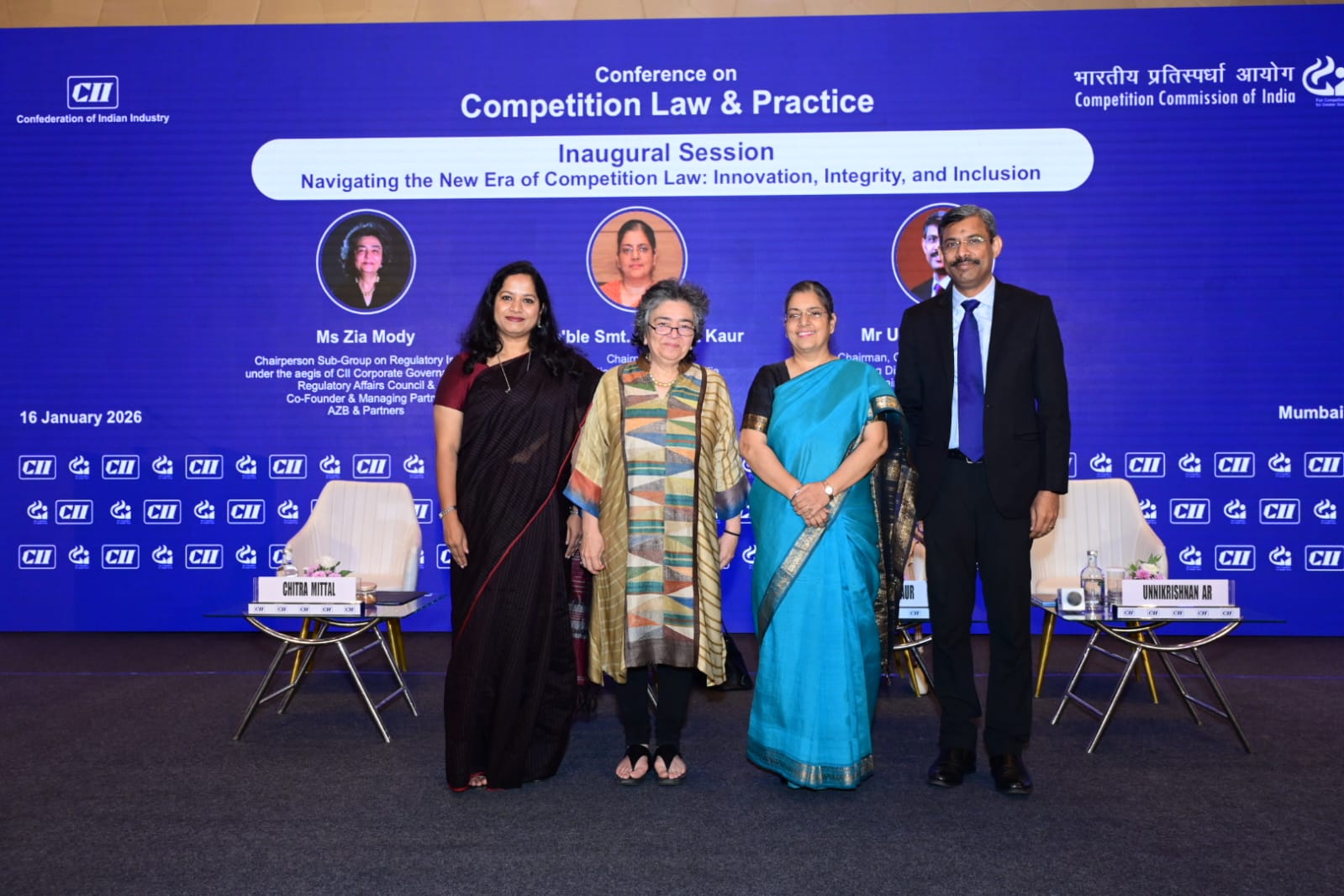
FinTech BizNews Service
Mumbai, 16 January 2026: Delivering the keynote address during the Annual Conference on Competition Law & Practice jointly organized by Competition Commission of India (CCI) and Confederation of Indian Industry (CII) at Mumbai today, Chairperson CCI Ravneet Kaur highlighted the evolving role of competition law in India’s dynamic economy for an adaptive enforcement, digital markets and innovation-friendly framework and the transformative role of regulator for effect-based enforcement amid digitization, technology and data.
She underlined the importance of dialogue in understanding market realities, ensuring regulatory clarity and promoting compliance. Chairperson, CCI highlighted that the regulator has continuously been refining its analytical tools and enforcement approaches in an integrated ecosystem shaping and fostering a fair, predictable, transparent and innovation-driven economy.
She referred that the Competition (Amendment) Act 2023 assumes particular significance as the amendments represent a major step in modernizing India’s competition law framework to align with contemporary market realities. Discussing evolving landscape of merger control, the Chairperson, CCI highlighted regulator’s key shift to greater openness to accepting merger remedies from traditional ‘decisive influence’ toward the lower threshold of ‘material influence’. The exchange of Commercially Sensitive Information (CSI) is now treated as a new pillar of merger control, she expressed.
She highlighted that in 2026, deal value threshold serves as a critical regulatory pillar, specifically designed to capture high-value acquisitions in digital and asset-light sector that previously bypassed scrutiny.
Speaking on anti-trust enforcement, Chairperson, CCI emphasized the importance of Leniency programs 2.0, Commitments and Settlements as progressive enforcement tools that foster compliance and market corrections. She apprised the heighted clarity to the legal framework by explicitly recognizing and penalizing Hub-and-Spoke (H&S) cartels. This marks a shift from the previous regime, where such arrangements were often misclassified as mere vertical restraints. Non-competing entities (hubs) can also apply for Leniency and the Leniency Plus facility, she added. Speaking on the CCI ‘Market Study on Artificial Intelligence and Competition’ released in October 2025, she added that the regulator has adopted a ‘light-touch’ regulatory approach, preferring persuasion and self-regulation.
Addressing the Conference, Mr Unnikrishnan AR, Chairman, CII Tamil Nadu State Council & Managing Director - Glass & Glass solutions, Saint-Gobain India Pvt Ltd stated that businesses flourish when it is trusted that markets are fair, institutions are balanced and growth and innovation are rewarded. He emphasized three aspects for a pro-competitive market, viz. Confidence, Competence and Innovation. Mr Unnikrishnan appreciated the remarkable work by CCI in ensuring that competition law in India evolves from being just a regulatory framework, to a catalyst for innovation, consumer empowerment, and market resilience. Mr Unnikrishnan stated that facilitating innovation, competitive pricing and healthy M&A will help create long term sustainable organizations, ensure efficient allocation of capital and growth of Indian economy as a whole for achieving the vision of Viksit Bharat 2047.
Ms. Zia Mody, Chairperson, Sub-Group on Regulatory Issues under the aegis of CII Corporate Governance and Regulatory Affairs Council & Co-Founder & Managing Partner, AZB & Partners shared her views on how 2025 has been a truly transformative year for India's competition landscape with rapid operationalization of the 2024 amendments to the Competition Act. Ms Mody spoke on the practical issues faced by industry stakeholders, including the heightened scrutiny of private equity transactions, and practical implications from calculation of deal value and substantial business operations in case of investor backed acquisitions. She also threw light on the recent enforcement trends including the CCI’s first settlement order. In conclusion, she emphasized that India's competition framework is clearly becoming more assertive and forward-looking, seeking a balance between robust enforcement and a business-friendly environment.
