RBI Governor tells banks to shape the AI transition or be shaped by it; RBI to continue to offer its regulatory sandbox and build shared utilities, including the digital payments intelligence platform
FinTech BizNews Service
Mumbai, 11 August 2026 - Reserve Bank of India Governor Sanjay Malhotra on Tuesday urged Indian banks to treat artificial intelligence as a board-driven strategic commitment rather than a series of technology purchases, warning that institutions which delay will find the transition made for them.
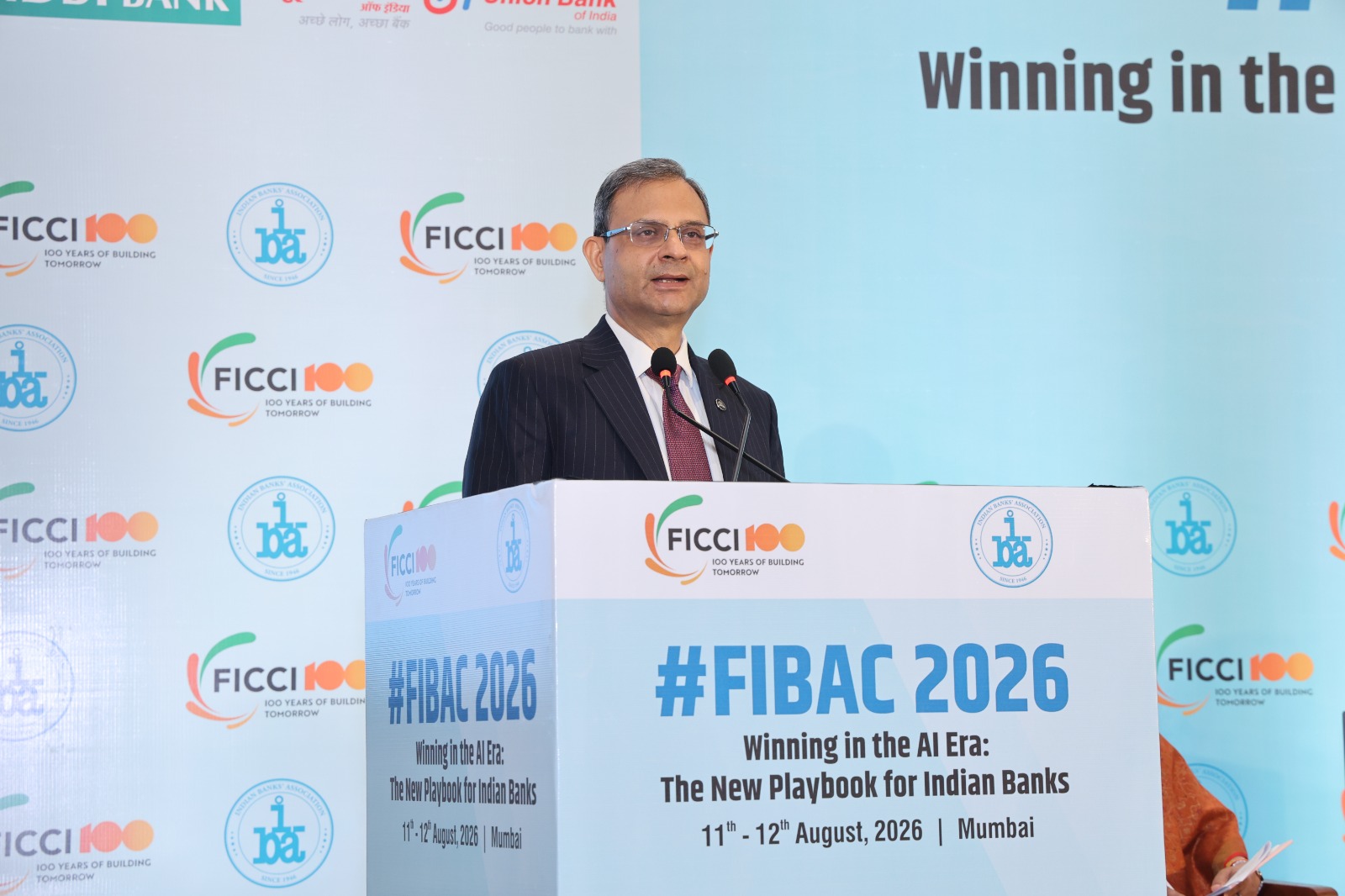
Reserve Bank of India Governor Sanjay Malhotra Delivering the inaugural address at FIBAC 2026
Delivering the inaugural address at FIBAC 2026, the annual banking conference organised by FICCI and the Indian Banks’ Association, Malhotra said AI would define this decade as digitalisation defined the 2000s and liberalisation the 1990s. “The only question now before us is whether you shape the AI journey or you let it shape you by default,” he said.
The two-day conference convened under the theme ‘Winning in the AI Era: The New Playbook for Indian Banks’, drew chief executives of the country’s largest public and private sector banks.
Malhotra argued that AI differs in kind from earlier technological shifts. Where electricity multiplied energy, and the internet multiplied connectivity, AI multiplies intelligence - with direct consequences for how credit is priced and delivered. Models trained on alternate data such as cash flows, tax filings, utility payments and digital platform records could extend the frontier of bankable India well beyond the reach of traditional underwriting, which depends on financial histories that are thin or absent for large sections of the population.
India, he said, holds a distinctive advantage through its public digital infrastructure, including Aadhaar, UPI, the account aggregator framework and the unified lending interface. AI had the potential to do for financial judgement what UPI did for financial transactions - making it instant, granular and available at the last mile. He also identified customer service, vernacular voice interfaces, operational efficiency and real-time fraud detection as areas where returns were immediate, noting that rules-based fraud engines remain perpetually a step behind fraudsters who adapt faster. He stressed that AI should augment rather than merely replace human judgement, and urged banks to invest in technology infrastructure, talent, skilling and reskilling, sustainable partnerships and appropriate governance structures to accelerate adoption.
The Governor alluded to risk, listing seven: the explainability of black-box decisions, bias and exclusion perpetuated from historical lending data, concentration risk from a small pool of models and vendors, third-party dependencies, data privacy obligations, cyber and adversarial vulnerabilities, and the erosion of human accountability. “Fairness in AI is not a compliance checkbox. It is a design requirement,” he said, adding that ultimate responsibility for a bank’s decision must rest with the bank, not the vendor or the algorithm.
Drawing on the recommendations of the RBI’s committee on the responsible and ethical enablement of AI, Malhotra set out immediate expectations: a complete inventory of models in production, a board-approved AI governance policy accountable for outcomes rather than procurement, the capacity to explain decisions that materially affect customers, red-teaming and stress-testing of AI systems, and meaningful human oversight wherever failure could cause material harm.
The regulator’s own approach would remain principles-based and proportionate, he said, given that capability and risk differ sharply between a large bank and a small one running a single off-the-shelf product. The RBI would continue to offer its regulatory sandbox and to build shared utilities, including the digital payments intelligence platform now being put in place.
Looking ahead, Malhotra said India needed to build further on the success of Jan Dhan while addressing a large underserved MSME credit market, improving customer service, lowering intermediation costs and preventing digital fraud. AI, he said, would need to be leveraged to address these challenges.
“The banks that will win in the AI era will not necessarily be the ones that adopt AI faster or the most,” he concluded. They would be those that deployed it with the clearest accountability for outcomes and the strongest commitment to customer trust — “the true capital of Indian banking.”
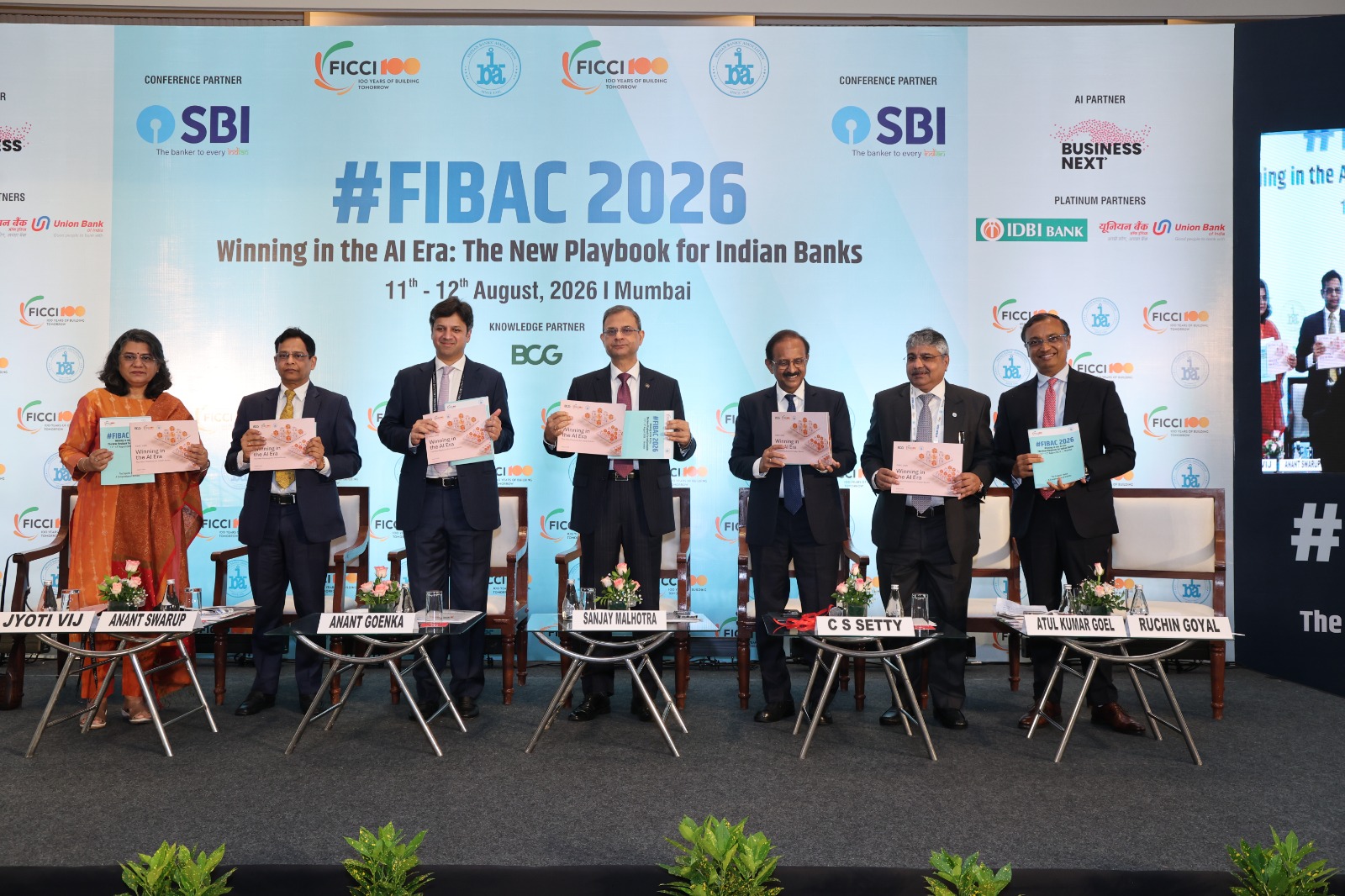
Mr Challa Sreenivasulu Setty, Chairman, IBA and Chairman, State Bank of India, said, “The real test of AI will not be how sophisticated our technology becomes, but what it enables us to accomplish - whether it can help a small business obtain timely credit, help a farmer manage risk, improve productivity, and make our financial system safer and more resilient.”
President FICCI Mr Anant Goenka averred that technology can support decisions, but institutional responsibility must remain paramount. “The new playbook can be captured in four words — partnership, prudence, innovation and inclusion,” he said.
Mr Atul Kumar Goel, Chief Executive, IBA, stated that the financial services industry is embracing AI at a faster pace, with Fintech companies moving fast in AI adoption.
FICCI Director General Jyoti Vij said, “The question before us is not only how quickly we can adopt AI, but how effectively we can use it to build stronger, more inclusive and more trusted financial institutions.”
Mr Ruchin Goyal, Managing Director and Senior Partner, BCG made a detailed presentation on the conference theme.
Mr Anant Swarup, Secretary General, FICCI delivered the Vote of Thanks.
