The developmental measures on interoperability among Account Aggregators and integration of bank deposit information into Consolidated Account Statements are important steps towards a more seamless, consent driven and integrated financial ecosystem.

FinTech BizNews Service
Mumbai, 07 October, 2026: The Monetary Policy Committee (MPC) held its 63rd meeting from October 5 to 7, 2026, under the chairmanship of Shri Sanjay Malhotra, Governor, Reserve Bank of India. The MPC members Dr. Nagesh Kumar, Shri Saugata Bhattacharya, Prof. Ram Singh, Dr. Poonam Gupta and Shri Indranil Bhattacharyya attended the meeting.
https://fintechbiznews.com/govtregulators/repo-rate-up-by-25-bps
Senior bankers from the leading PSU and private banks comment on the RBI's monetary policy decisions, which were announced today.
Shri CS Setty, Chairman, State Bank of India & Indian Banks’ Association (IBA):

"The RBI’s policy action reflects a calibrated response to emerging inflationary pressures while recognising the underlying resilience of the Indian economy. The upward revision in the growth outlook is reassuring, even as geopolitical developments and supply-side pressures including elevated energy prices warrant continued close monitoring. The developmental measures on interoperability among Account Aggregators and integration of bank deposit information into Consolidated Account Statements are important steps towards a more seamless, consent driven and integrated financial ecosystem. The proposed Technical Consultative Committee is also expected to strengthen structured engagement between the regulator and financial-market participants."
PD Singh, CEO, India & South Asia, Standard Chartered Bank:

"The RBI's decision to raise the repo rate reflects its continued commitment to anchoring inflation expectations amid a more challenging global backdrop. While the move signals a clear prioritisation of price stability in the face of rising inflationary pressures, the upgrade to the FY27 growth forecast to 7.1% underscores the resilience of the Indian economy and strength of domestic demand. The banking system too remains well placed to support credit growth given the strong liquidity position.”
Sarvjit Singh Samra, MD & CEO, Capital Small Finance Bank:

“The Reserve Bank of India’s decision to raise the policy repo rate by 25 basis points to 5.50%, while simultaneously shifting the monetary policy stance to “calibrated tightening,” marks an important inflection point in India’s monetary policy journey. For much of the recent period, monetary policy had the space to support growth as inflation had moderated, and domestic economic activity remained resilient. The latest policy recognizes that the environment is evolving that warrants greater policy vigilance. Inflation remains the variable to watch.
At the same time, the RBI has retained confidence in the underlying strength of the Indian economy. Growth remains broad-based, domestic demand continues to provide an important anchor, and the financial system is significantly better positioned to absorb external shocks than it was in earlier cycles. The era of automatic rate cuts is, for the moment, behind us. However, calibrated tightening should not be interpreted as a commitment to a prolonged or aggressive rate-hiking cycle. The policy framework is becoming more data-dependent and risk-sensitive. For the banking sector, the next phase will therefore be about balancing growth with resilience stronger deposits with prudent credit, profitability with asset quality, and expansion with capital discipline.
At Capital Small Finance Bank, we remain confident in the underlying strength of the Indian economy and the long-term opportunity presented by India's rising formalisation, financial inclusion and credit penetration. The opportunity remains compelling. The task now is not simply to grow through the cycle, but to build institutions capable of growing sustainably through every cycle.”;
Binod Kumar, MD & CEO, Indian Bank
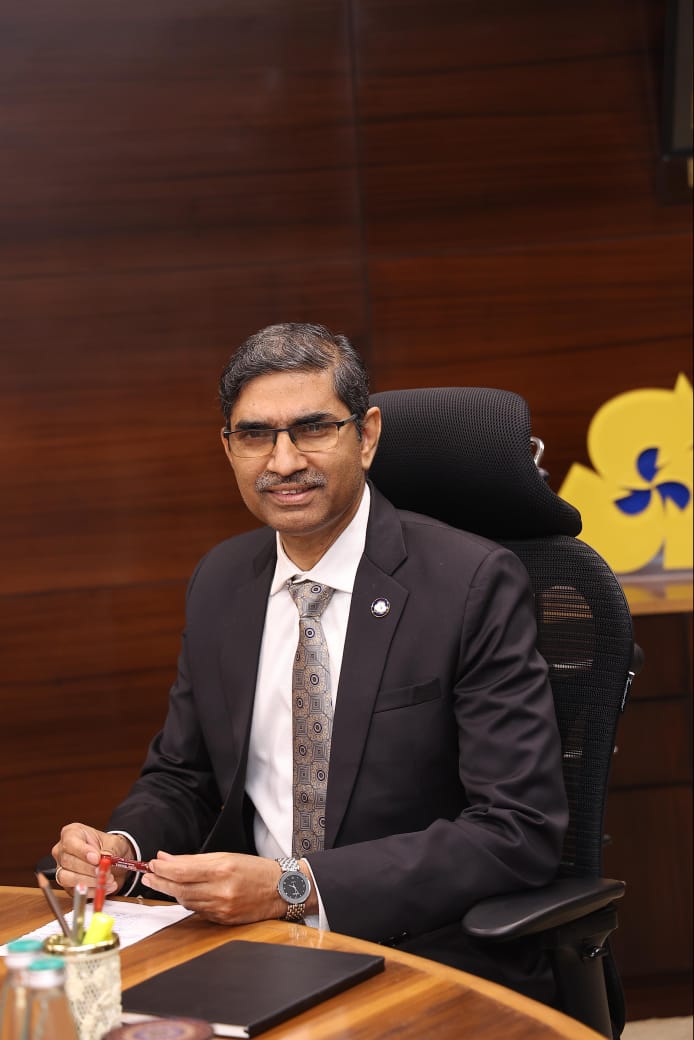
MPC’s projected GDP growth for FY 27 of 7.1% reflects the resilience and strong macroeconomic fundamentals of the Indian economy. With the global monetary conditions remaining tight and inflationary expectations now projected at 5.2% for FY27, the RBI has also indicated a calibrated tightening by increasing the repo rate by 25 bps to 5.5% for managing India-US yield differentials. Indian Bank remains committed to support our customers through competitive lending rates and attractive deposit yields through timely policy rate transmission.
Ms. Anitha Rangan, Chief Economist, RBL Bank:

The RBI Monetary Policy delivered a 25 bp hike, in line with expectations, with a unanimous vote. The RBI also changed its stance to "calibrated tightening" on a 4/2 vote, which indicates that the prospective cycle is on the hiking side.
The RBI has revised its inflation estimates upwards, to 5.6-6% from Q3 through Q1 FY28, which is above the 4% target. Growth has also been revised upwards to 7.1% for the year, with strong momentum into Q2 at 7.2%, moderating to 6.9% and 6.8% thereafter. This reflects robust growth despite geopolitical and weather-related shocks.
The key takeaway was the RBI's emphasis that CAD risks are elevated. The overall tone of the policy continued to acknowledge risks, both external and domestic. On the domestic side, these are largely led by El Niño, which is expected to extend into the rabi season. The RBI did not announce any liquidity measures but stated that its objective is to keep the weighted average rate close to the policy rate. We expect liquidity measures to continue to moderate system liquidity. The RBI's observation that "transmission in the credit market reflected dissimilar movements in deposit and lending rates during July-August" suggests a preference for tighter liquidity, which is consistent with a calibrated tightening cycle in which liquidity is not in surplus.
In summary, this is a policy with a clear tightening bias, marking the start of a tightening cycle. The RBI is likely to pursue liquidity tightening and rate hikes in tandem, with at least 75 bp more (cumulative 100 bp), to stay in sync with rising global yields. This would support the currency and also help attract capital flows, especially on the debt side.
R Baskar Babu, MD & CEO, Suryoday Small Finance Bank:

The RBI’s decision to raise the repo rate by 25 bps to 5.50% reflects a measured approach to addressing emerging inflationary pressures while keeping the growth outlook in focus. For Small Finance Banks, the changing rate environment calls for a balanced approach to credit growth, deposit mobilisation and funding costs. While higher rates may increase pressure on borrowing and deposit costs, resilient domestic demand continues to provide opportunities to deepen credit penetration across retail, microfinance and MSME segments.
With the RBI raising its FY27 growth forecast to 7.1%, domestic economic activity remains resilient, although elevated crude oil prices and other global and weather-related uncertainties warrant continued vigilance. The shift towards a calibrated tightening stance also provides greater clarity on the evolving interest rate environment. At Suryoday Small Finance Bank, we remain focused on disciplined growth, strengthening our deposit franchise and maintaining a prudent approach to risk and profitability while continuing to serve underserved customers and emerging entrepreneurs.
Gaurav Kapur, Chief Economist, IndusInd Bank:

"Highly likely that the Repo rate would be raised in the next two MPC meetings of December and February 2027 in order to ensure that the real Repo rate is calibrated to account for inflation rising to the upper end of the tolerance band of 6% and staying well above the target of 4% over the next three quarters and the next fiscal year"
“The outcome of the October MPC meeting was along the expected lines. In the backdrop of heightened risks to CPI inflation, resilient and stronger-than-expected growth despite persistent energy shock and tightening financial and monetary conditions in key advanced economies, it was highly likely that monetary tightening would be pursued. Reflecting on evolving growth and inflation conditions, the RBI revised its baseline forecast of real GDP and inflation upwards. With economic growth resilient and financial conditions turning more conducive for growth following a significant increase in surplus liquidity in the banking system, the MPC has thus chosen to focus on ensuring price stability, especially as household inflation expectations for near-term and 1-year ahead are rising. Basis these baseline forecasts, it is now highly likely that the Repo rate would be raised in the next two MPC meetings of December and February 2027 in order to ensure that the real Repo rate is calibrated to account for inflation rising to the upper end of the tolerance band of 6% and staying well above the target of 4% over the next three quarters and the next fiscal year.”
Mr Vinod Francis, SGM & Chief Financial Officer, South Indian Bank:

“The RBI’s decision to raise the repo rate by 25 bps to 5.50% and shift its policy stance to calibrated tightening marks the beginning of a new rate-hike cycle. At the same time, the upward revision of the FY27 growth outlook to 7.1% reinforces the strength and resilience of India’s underlying economic momentum.
Credit demand remains healthy across segments, with MSMEs in particular likely to remain an important engine of economic activity as businesses expand, invest and strengthen their operations. At South Indian Bank, we remain confident about the growth opportunities across MSMEs and retail segments. We remain focused on supporting our customers through timely, responsive and relationship-led banking solutions."
Mr. Pralay Mondal, MD & CEO, CSB Bank:
"The Repo rate hike is a prudent step in an uncertain global scenario. The underlying stress in inflation for the next few quarters warranted some steps in time to prevent further escalation. A rate hike would not be effective without calibrating the operative rate to repo rate. However, RBI is expected to maintain adequate liquidity for smooth functioning of the money markets."
